



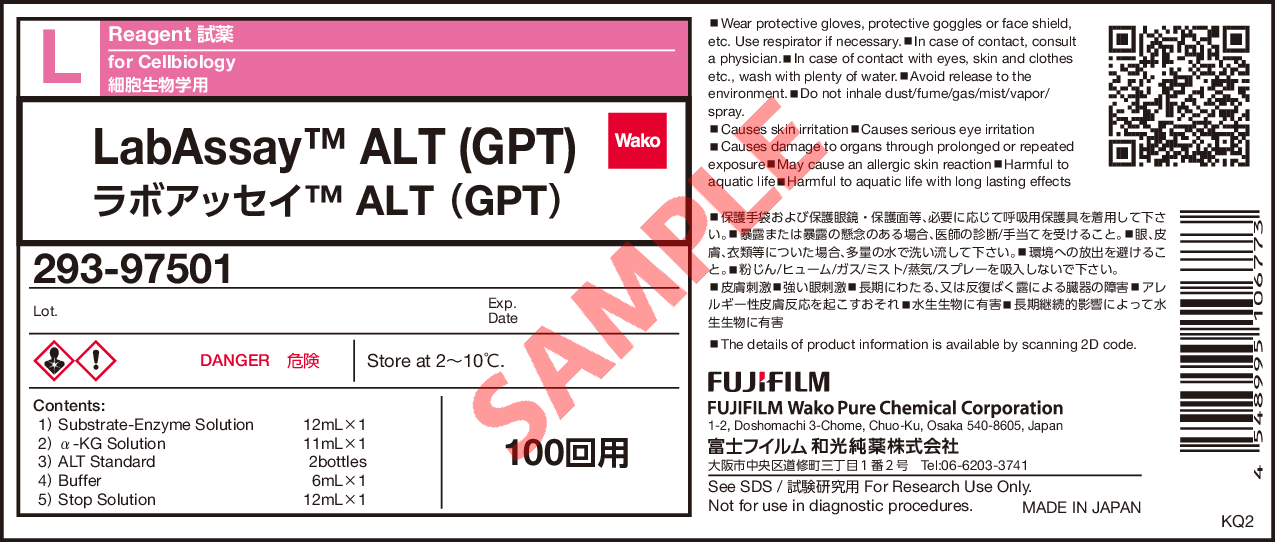
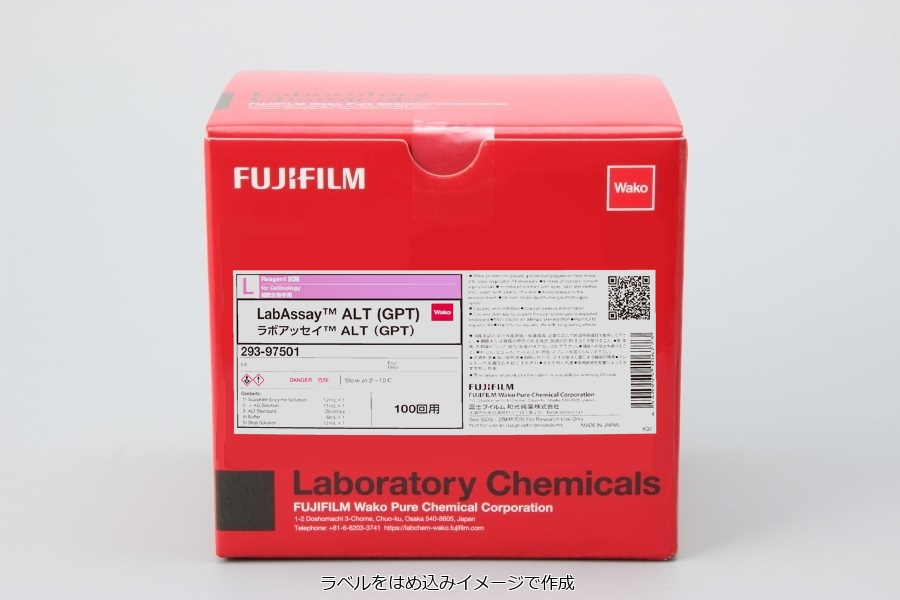
LabAssay™ ALT (GPT)
- for Cellbiology
- Manufacturer :
- FUJIFILM Wako Pure Chemical Corporation
- Storage Condition :
- Keep at 2-10 degrees C.
- GHS :
-


-
 Close
Close -
 Close
Close
- Structural Formula
- Label
- Packing
- SDS
|
Comparison
|
Product Number
|
Package Size
|
Price
|
Inventory
|
|
|---|---|---|---|---|---|
|
|
|
100Tests
|
|
In stock in Japan |
Please check here for notes on products and prices.
Document
Kit component
For 100 tests
| Substrate-Enzyme Solution | 12 mL |
|---|---|
| α-KG Solution | 11 mL |
| ALT Standard | 2 bottles |
| Buffer | 6 mL |
| Stop Solution | 12 mL |
Product Overview
Alanine aminotransferase (ALT) is an enzyme that catalyzes the conversion of alanine and α-ketoglutarate through amino group transfer. Previously known as glutamate pyruvate transaminase (GPT), its name was revised to conform to international nomenclature standards. ALT is involved in intracellular amino acid metabolism and gluconeogenesis in the liver, and is highly abundant in liver tissue, whereas its expression level is low in non-hepatic tissues in rats and humans. Given these characteristics, ALT is widely used as a primary marker of liver dysfunction.
LabAssay™ ALT (GPT) is a kit designed to measure ALT in samples. With the use of microplate, this kit provides a quick and convenient method for measuring ALT in samples.
[Note] LabAssay™ series are reagents for research purposes. They cannot be used for diagnostic purposes.
Kit Performance
| Analysis sample | Human Serum/Plasma Mouse Serum/Plasma Rat Serum/Plasma Dog Serum/Plasma Cat Serum/Plasma |
|---|---|
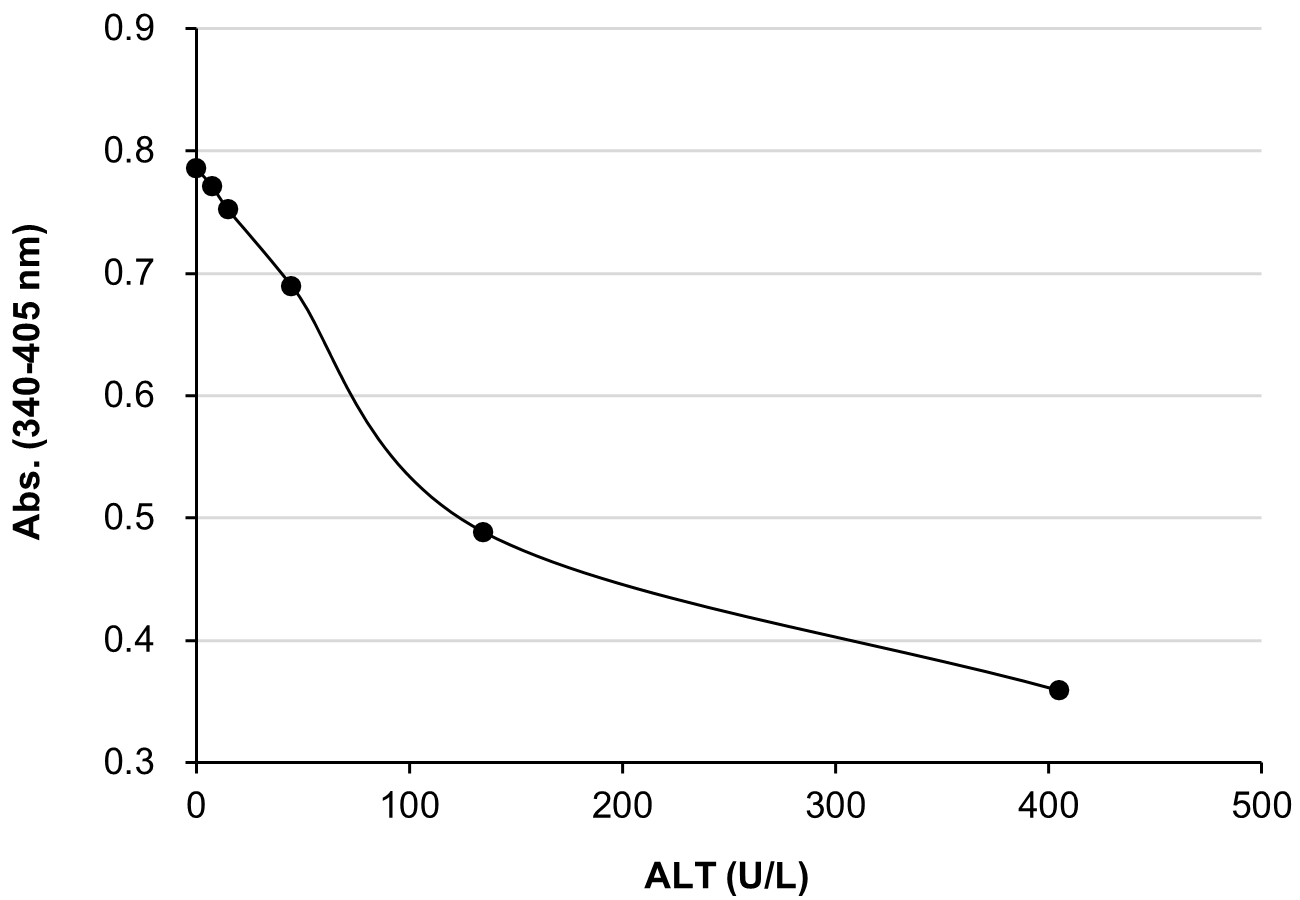
| Calibration curve range | 0-405 U/L |
| Sample volume | 7 μL |
| Measurement duration | Approx. 40 min |
| Wavelength | Primary wavelength 340 nm Reference wavelength 405 nm |
Example of Calibration Curve
Assay Principle
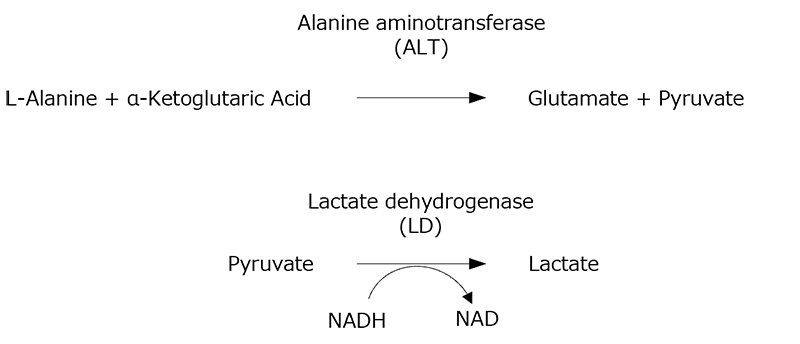
When a sample is mixed with Substrate-Enzyme Solution and α-KG Solution, glutamate and pyruvate are formed from L-alanine and α-ketoglutarate in a reaction catalyzed by ALT in the sample. The pyruvate thus produced is converted to lactate by lactate dehydrogenase (LD). At the same time, NADH is oxidized to NAD, and the absorbance at 340 nm decreases. Finally, the reaction is stopped using a reaction Stop Solution, and the absorbance is measured to determine the ALT activity value in the sample.
Data
Repeatability (within run precision)
Repeatability was conducted by measuring quintuplicate assays of serum and plasma (EDTA) samples from human at two concentrations with this product.
| n\ID | Human serum | Human plasma (EDTA) | ||
|---|---|---|---|---|
| ID1 (U/L) | ID2 (U/L) | ID3 (U/L) | ID4 (U/L) | |
| 1 | 162 | 8.55 | 252 | 40.5 |
| 2 | 165 | 7.72 | 279 | 38.0 |
| 3 | 159 | 8.17 | 255 | 39.6 |
| 4 | 161 | 9.32 | 251 | 37.4 |
| 5 | 165 | 8.55 | 280 | 39.3 |
| mean | 162 | 8.46 | 263 | 39.0 |
| SD | 2.61 | 0.589 | 14.8 | 1.25 |
| CV(%) | 1.6 | 7.0 | 5.6 | 3.2 |
[Result]
The CV (%) of human serum was 1.6-7.0% and human plasma (EDTA) was 3.2-5.6%, indicating good repeatability.
Reproducibility (between run precision)
Reproducibility was conducted by measuring serum and plasma (EDTA) samples from human at three concentrations each for four days with this product.
| Day\ID | Human serum | Human plasma (EDTA) | ||||
|---|---|---|---|---|---|---|
| ID7 (U/L) | ID8 (U/L) | ID9 (U/L) | ID10 (U/L) | ID11 (U/L) | ID12 (U/L) | |
| 1 | 294 | 102 | 30.0 | 294 | 98.8 | 26.1 |
| 2 | 301 | 103 | 31.3 | 304 | 102 | 27.6 |
| 3 | 292 | 102 | 29.9 | 292 | 98.8 | 25.7 |
| 4 | 304 | 101 | 31.4 | 298 | 99.1 | 26.0 |
| mean | 298 | 102 | 30.7 | 297 | 99.7 | 26.4 |
| SD | 5.68 | 0.816 | 0.810 | 5.29 | 1.56 | 0.850 |
| CV(%) | 1.9 | 0.8 | 2.6 | 1.8 | 1.6 | 3.2 |
[Result]
The CV (%) of human serum was 0.8-2.6%, and human plasma was 1.6-3.2%, indicating good reproducibility.
Dilution Linearity Test
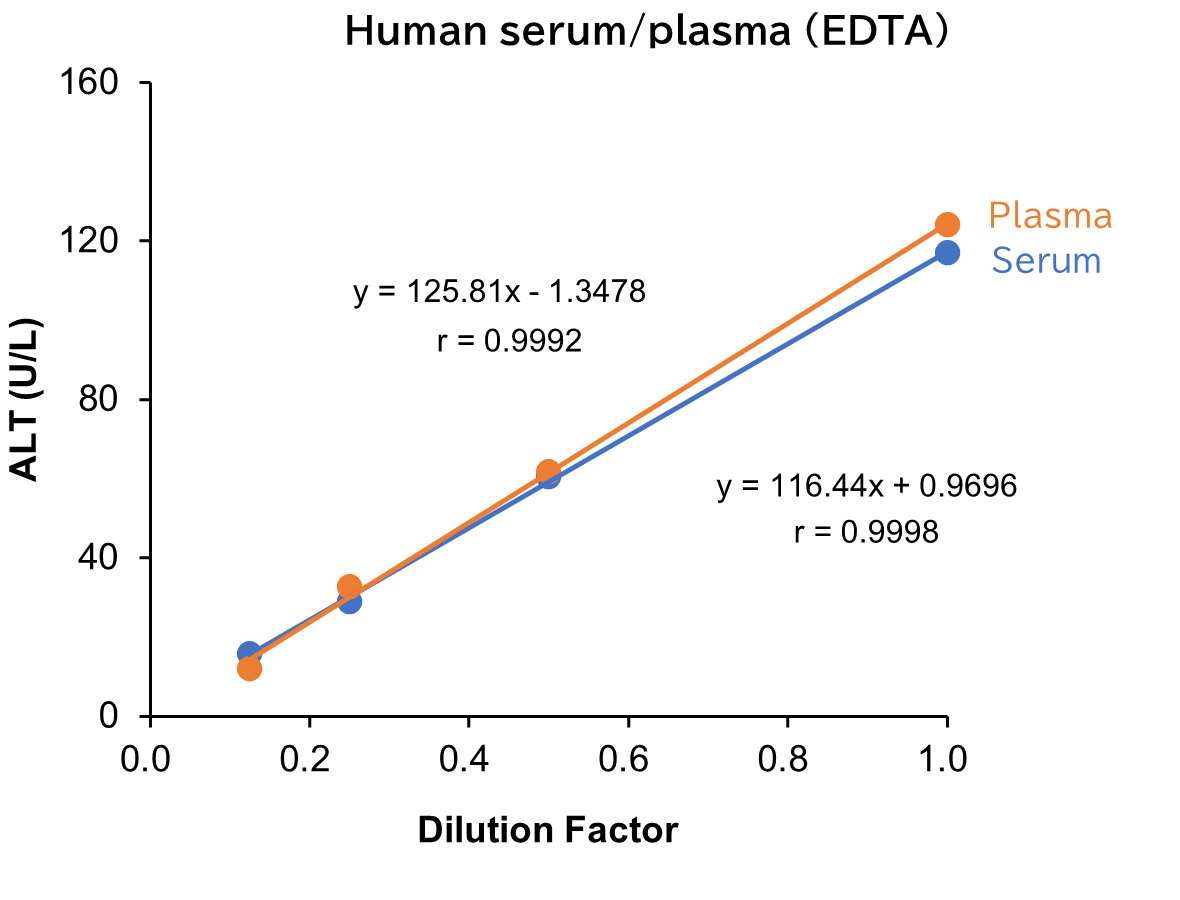
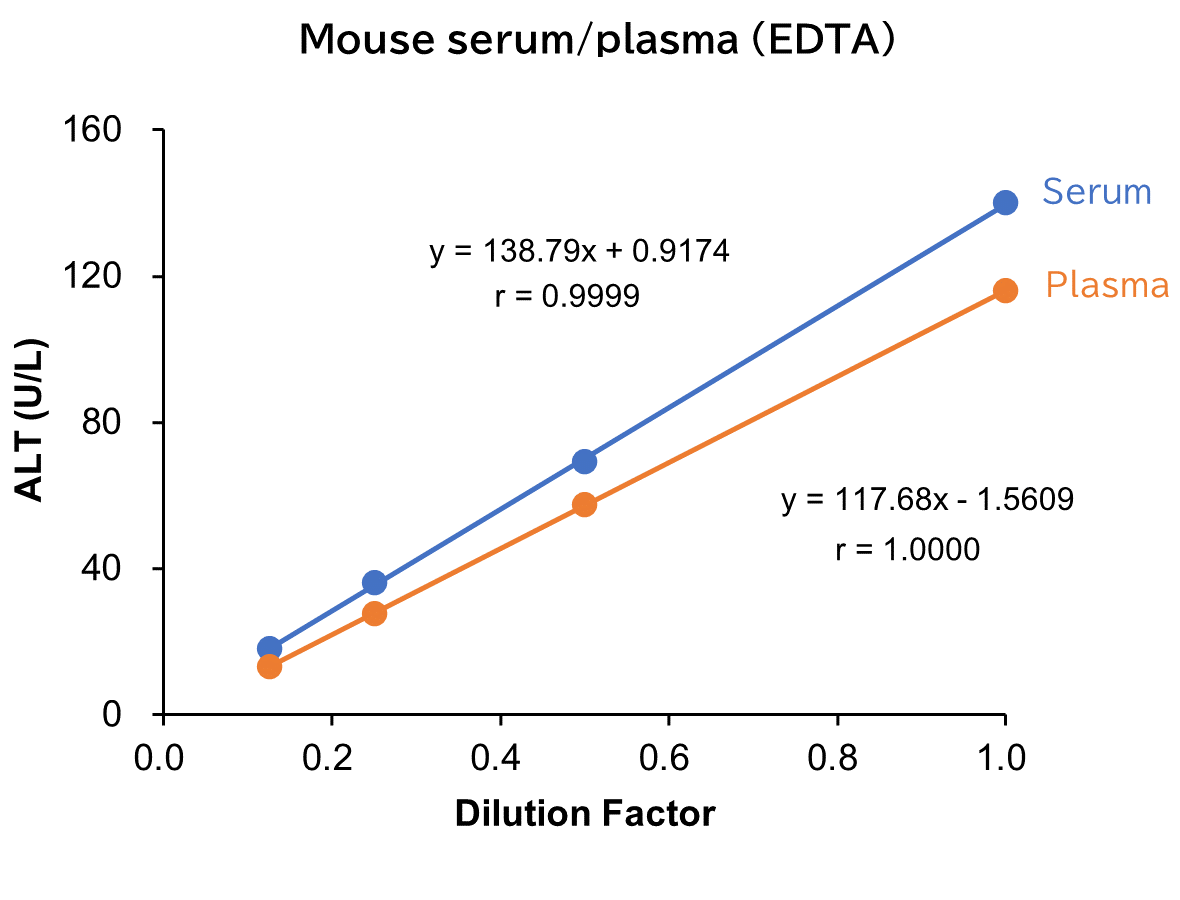
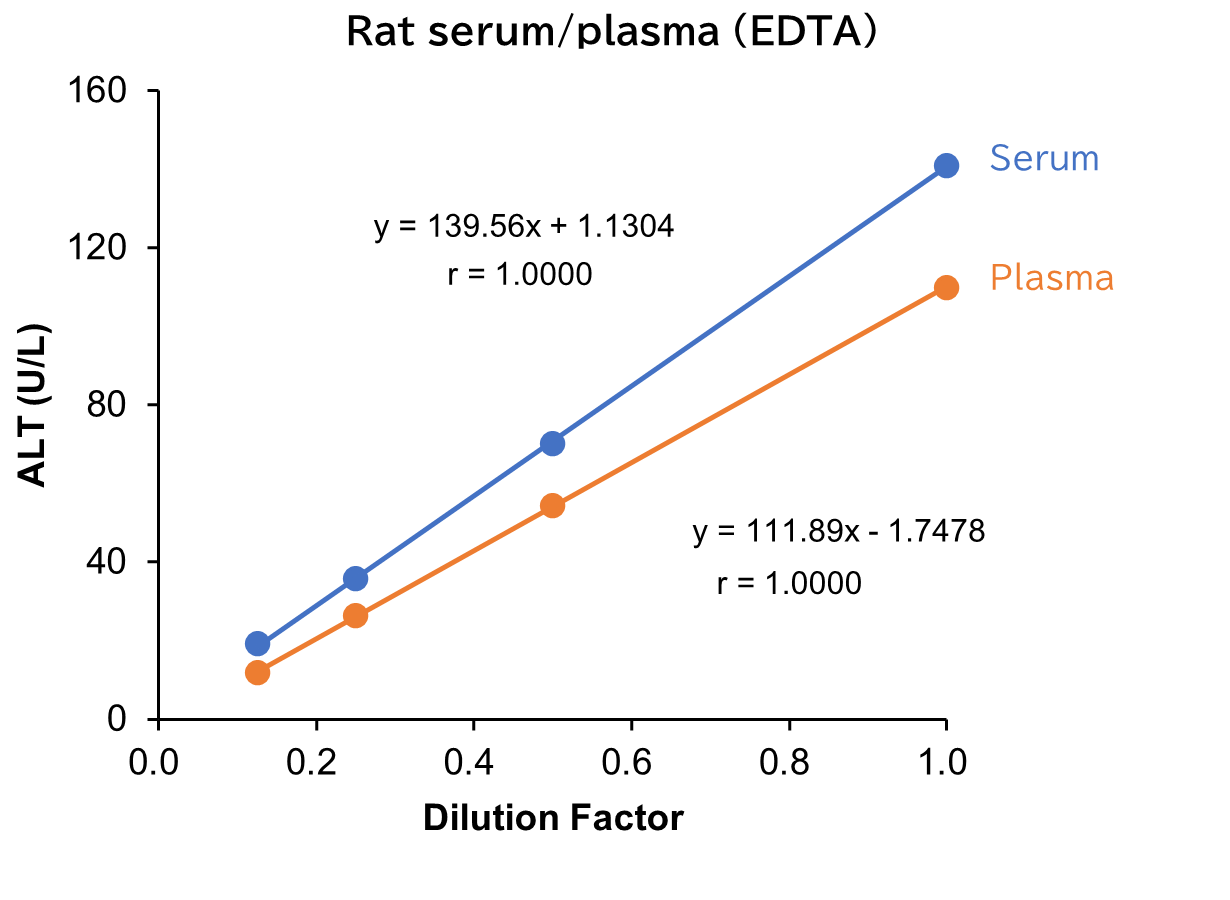
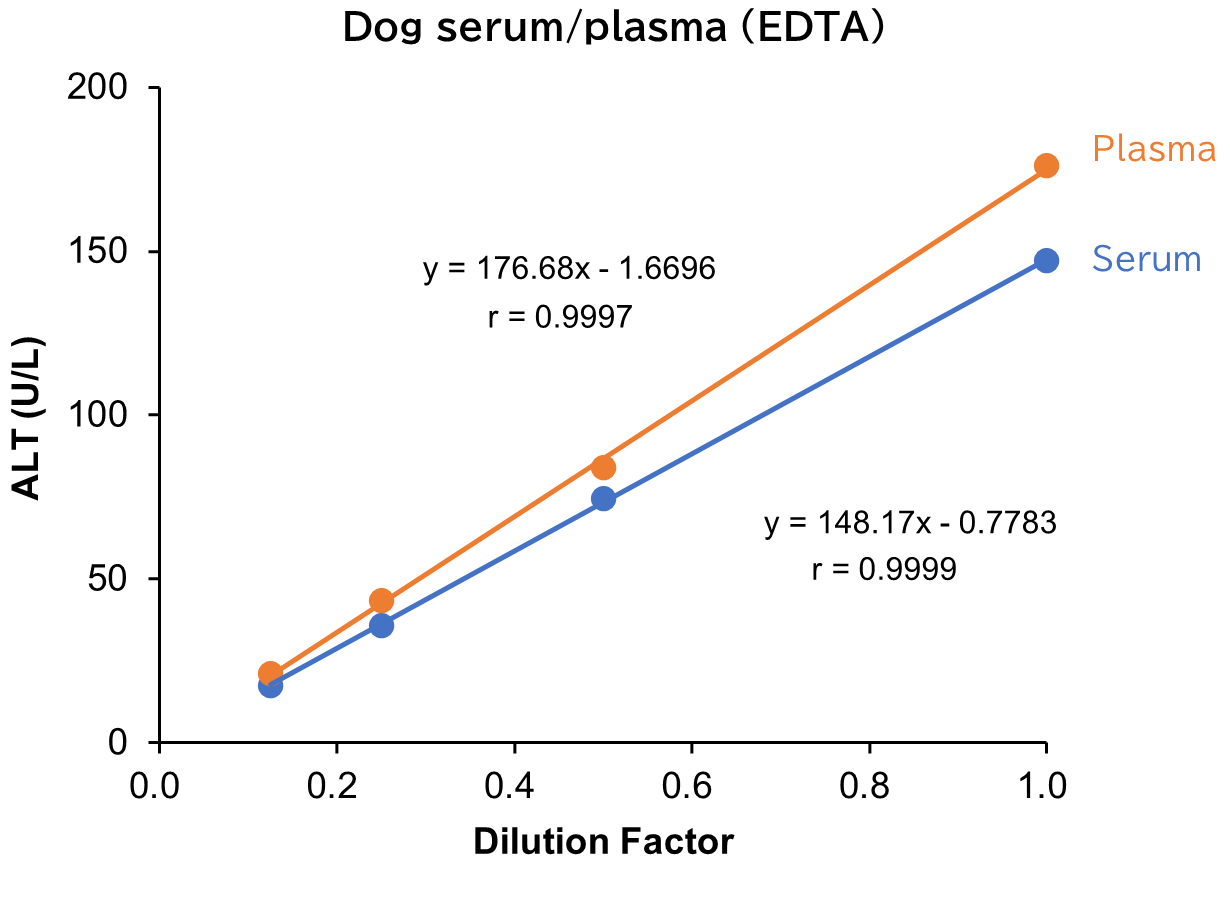
Serum and plasma (EDTA) from human, mouse, rat, dog and cat were serially diluted twofold with buffer in this kit and measured in duplicate to assess linearity.
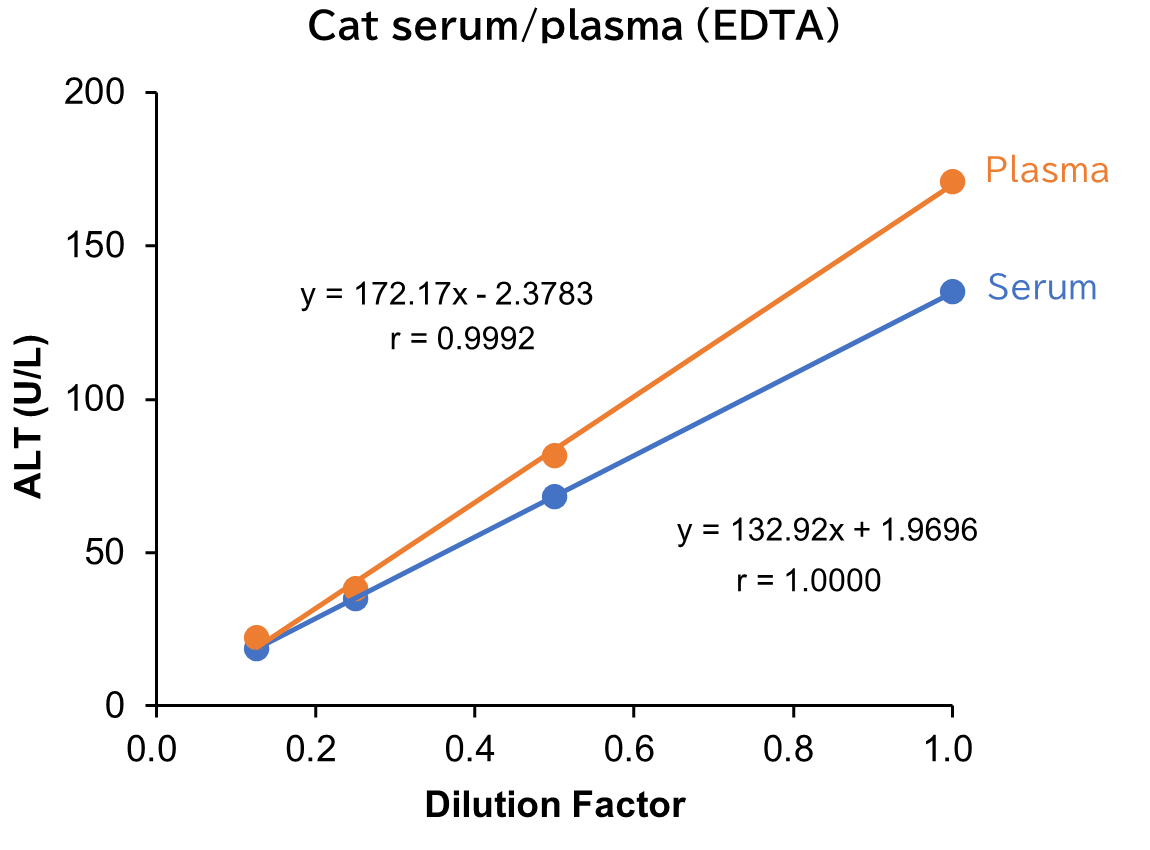
[Result]
All measurement results showed good linearity within the measurement range.
Spike and Recovery Test
Standard solutions at three concentrations were added to serum/plasma (EDTA) from human, mouse, rat, dog and cat. Next, spike recovery tests were conducted, with each measurement performed in duplicate.
Human sample
| Spiked amount (mmol/L) |
Measurement value (mmol/L) |
Recovery volume (mmol/L) |
Recovery rate (%) |
|
|---|---|---|---|---|
| Serum | - | 14.4 | - | - |
| 11.3 | 25.7 | 11.3 | 100 | |
| 22.4 | 37.3 | 22.9 | 102 | |
| 104 | 115 | 101 | 97.1 | |
| Average | 99.7 | |||
| Plasma (EDTA) |
- | 9.10 | - | - |
| 11.3 | 19.4 | 10.3 | 91.2 | |
| 22.3 | 32.3 | 23.2 | 104 | |
| 103 | 108 | 98.9 | 96.0 | |
| Average | 97.1 | |||
Mouse sample (BALB/c)
| Spiked amount (mmol/L) |
Measurement value (mmol/L) |
Recovery volume (mmol/L) |
Recovery rate (%) |
|
|---|---|---|---|---|
| Serum | - | 17.4 | - | - |
| 35.7 | 51.9 | 34.5 | 96.6 | |
| 70.7 | 79.4 | 62.0 | 87.7 | |
| 139 | 157 | 140 | 101 | |
| Average | 95.1 | |||
| Plasma (EDTA) |
- | 16.9 | - | |
| 35.7 | 48.9 | 32.0 | 89.6 | |
| 70.7 | 80.1 | 63.2 | 89.4 | |
| 139 | 164 | 147 | 106 | |
| Average | 95.0 | |||
Rat sample (S.D. rat)
| Spiked amount (mmol/L) |
Measurement value (mmol/L) |
Recovery volume (mmol/L) |
Recovery rate (%) |
|
|---|---|---|---|---|
| Serum | - | <1.90 | - | - |
| 37.8 | 39.0 | 39.0 | 103 | |
| 75.0 | 65.7 | 65.7 | 87.6 | |
| 147 | 142 | 142 | 96.6 | |
| Average | 95.7 | |||
| Plasma (EDTA) |
- | <1.90 | - | - |
| 38.0 | 34.8 | 34.8 | 91.6 | |
| 75.2 | 68.9 | 68.9 | 91.6 | |
| 148 | 146 | 146 | 98.6 | |
| Average | 93.9 | |||
Dog sample (Beagle)
| Spiked amount (mmol/L) |
Measurement value (mmol/L) |
Recovery volume (mmol/L) |
Recovery rate (%) |
|
|---|---|---|---|---|
| Serum | - | 15.3 | - | - |
| 37.0 | 48.3 | 33.0 | 89.2 | |
| 73.2 | 89.1 | 73.8 | 101 | |
| 144 | 176 | 161 | 112 | |
| Average | 101 | |||
| Plasma (EDTA) |
- | 30.5 | - | - |
| 39.7 | 67.1 | 36.6 | 92.2 | |
| 78.6 | 105 | 74.5 | 94.8 | |
| 154 | 196 | 166 | 108 | |
| Average | 98.3 | |||
Cat sample (Japanese Cat)
| Spiked amount (mmol/L) |
Measurement value (mmol/L) |
Recovery volume (mmol/L) |
Recovery rate (%) |
|
|---|---|---|---|---|
| Serum | - | 12.9 | - | - |
| 39.5 | 55.0 | 42.1 | 107 | |
| 78.2 | 86.3 | 73.4 | 93.9 | |
| 153 | 179 | 166 | 108 | |
| Average | 103 | |||
| Plasma (EDTA) |
- | 47.5 | - | - |
| 40.2 | 84.1 | 36.6 | 91.0 | |
| 79.5 | 127 | 79.5 | 100 | |
| 156 | 216 | 169 | 108 | |
| Average | 99.7 | |||
[Result]
Good recovery rates were confirmed.
Correlation with Automated Analyzer Reagents
ALT levels in serum/plasma (EDTA) from human were measured using LabAssay™ ALT (GPT) (this product) and reagents for automated analyzers, and the correlation between the two sets of results was evaluated.
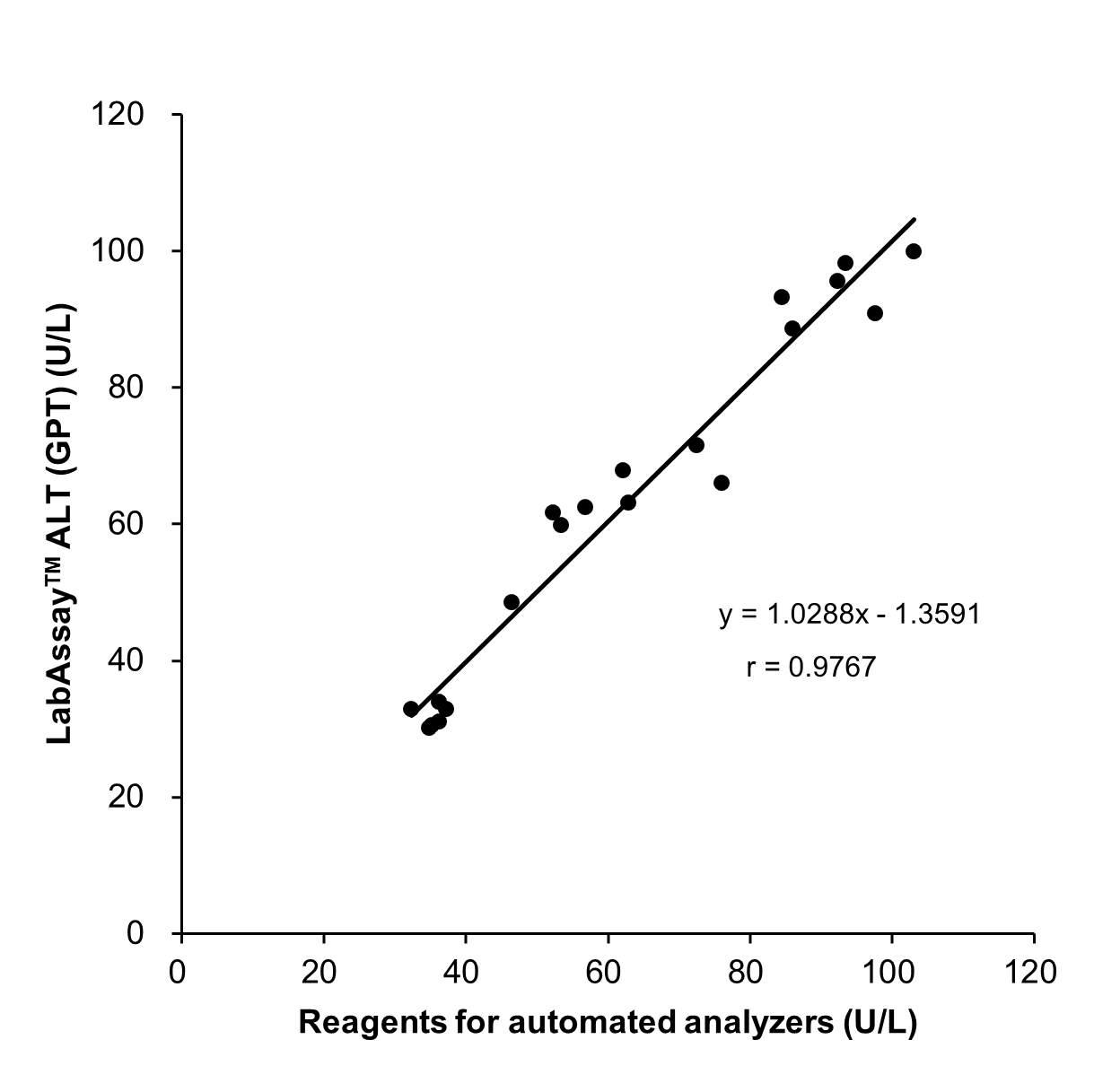
[Result]
A strong correlation was confirmed between the values obtained with LabAssay™ ALT and those obtained using reagents for automated analyzers.
FAQ
About sample
- Which anticoagulants can I use?
- Anticoagulants such as heparin, citrate and EDTA do not significantly influence the assay when used in normal amounts.
- What should I do with samples that exceed the measurable range?
- Dilute specimen with saline and repeat the assay if the measured value exceeds the measurable range, and multiply the result by the dilution factor.
- Is there any influence from substances that interfere with measurement (hemolysis, chyle, ascorbic acid, bilirubin, etc.)?
- Please treat the measured values of hemolyzed samples as reference values. Chyle, ascorbic acid, and bilirubin have almost no effect on the measured values. We have confirmed that there is no influence at the following concentrations.
Effects of interfering substances
Hemolysis No influence up to 100 mg/dL Chyle No influence up to 500 FTU Ascorbic acid No influence up to 50 mg/dL Bilirubin-F No influence up to 50 mg/dL Bilirubin-C No influence up to 20 mg/dL
About kit usage
- What instruments, and equipment are required for the assay using this kit?
- The instruments and equipment required for the use of this kit are listed below.
- 96-well microplate (transparent type)
- Micropipette
- Pipette
- Microtube
- Incubator maintained at 37°C
- Plate mixer*
- Microplate reader with 340 nm/405 nm wavelength filter
(* if the microplate reader does not have a stirring function.)
- What is the amount of purified water to be added to the standard product?
- Find and check “Reconstitution of standard” on this product page. As the amount of purified water to be added varies by lot, be sure to check it for every lot.
Overview / Applications
Property
Manufacturer Information
Alias
For research use or further manufacturing use only. Not for use in diagnostic procedures.
Product content may differ from the actual image due to minor specification changes etc.
If the revision of product standards and packaging standards has been made, there is a case where the actual product specifications and images are different.
The prices are list prices in Japan.Please contact your local distributor for your retail price in your region.