



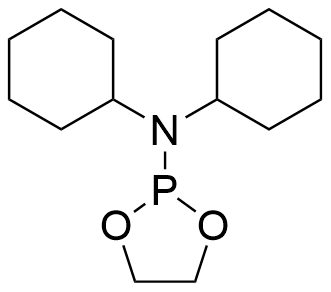
N,N-Dicyclohexyl-1,3,2-dioxaphospholan-2-amine
- for Nucleic Acid Synthesis
- Specification Assay :
- 95.0+% (qNMR)
- Manufacturer :
- FUJIFILM Wako Pure Chemical Corporation
- Storage Condition :
- Keep at -20 degrees C.
- CAS RN® :
- 28623-32-7
- Molecular Formula :
- C14H26NO2P
- Molecular Weight :
- 271.34
-
 Close
Close -
 Close
Close -
 Close
Close
- Structural Formula
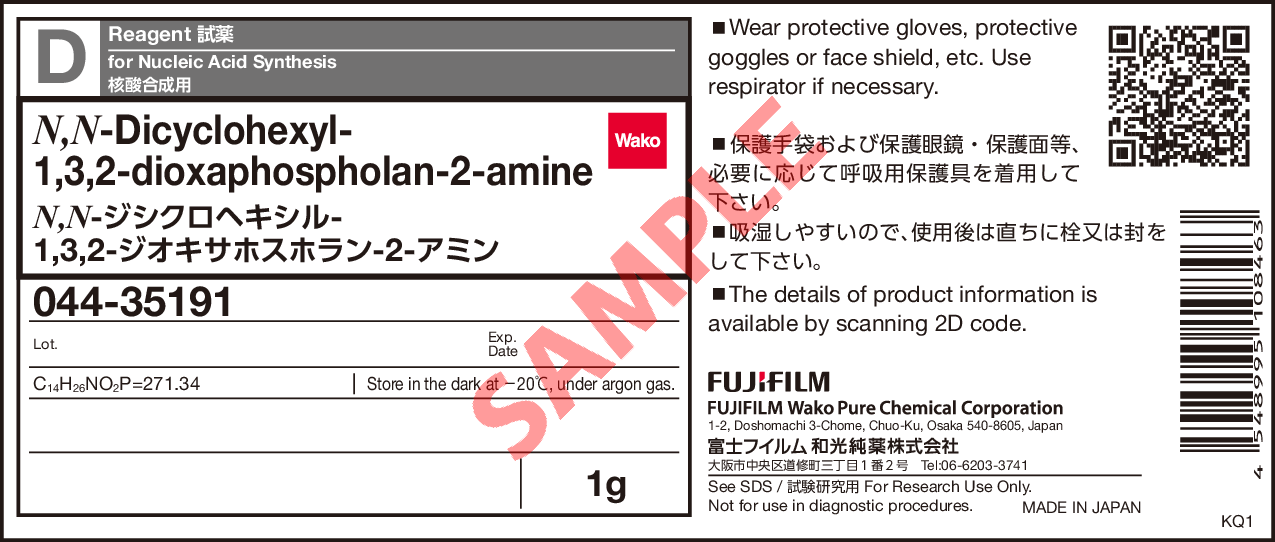
- Label
- Packing
- SDS
|
Comparison
|
Product Number
|
Package Size
|
Price
|
Availability
|
Certificate of Analysis
|
Purchase |
|---|---|---|---|---|---|---|
|
|
|
1G
|
|
In stock in Japan |
※Check availability in the US with the distributor.
Document
Features
- Avoids side‑reactions such as substitution reactions associated with conventional acetyl capping
- Capping can be performed under standard coupling conditions
- Exhibits high reactivity toward primary alcohols and sterically hindered secondary alcohols
- Highly soluble in acetonitrile (2.4 mol/L at 25 °C)
- THF is not required as a solvent, thereby avoiding desulfurization
- Solid form allows easy handling (melting point: 54 - 56 °C)
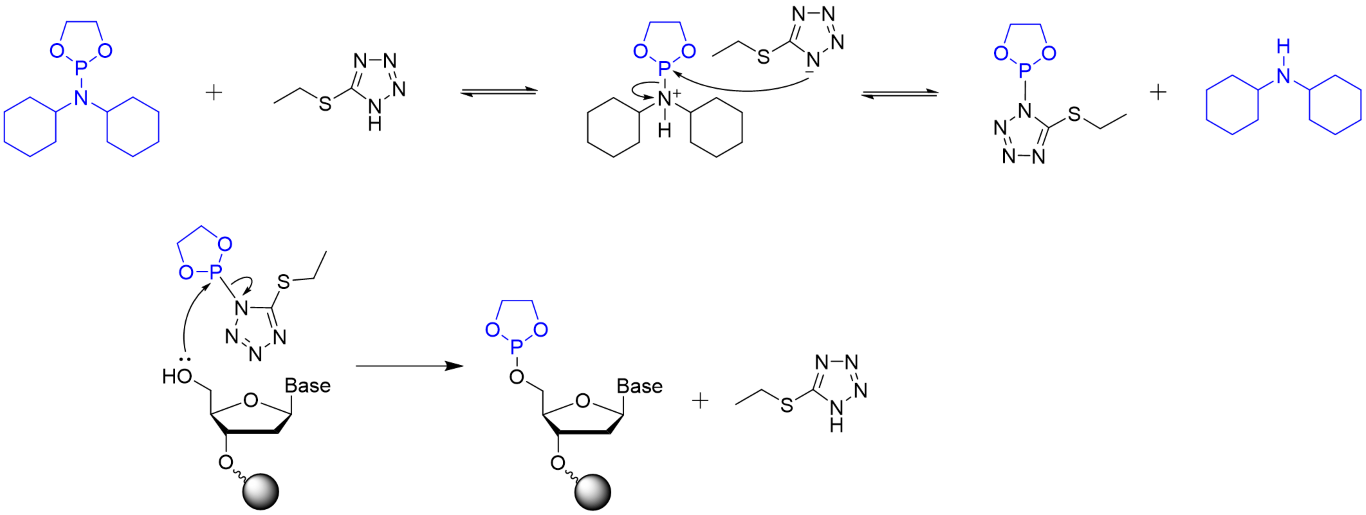
Reaction Mechanism
Capping reaction using EDCP
Applications
Comparison of capping efficiency for primary hydroxyl group at the 5′ terminus
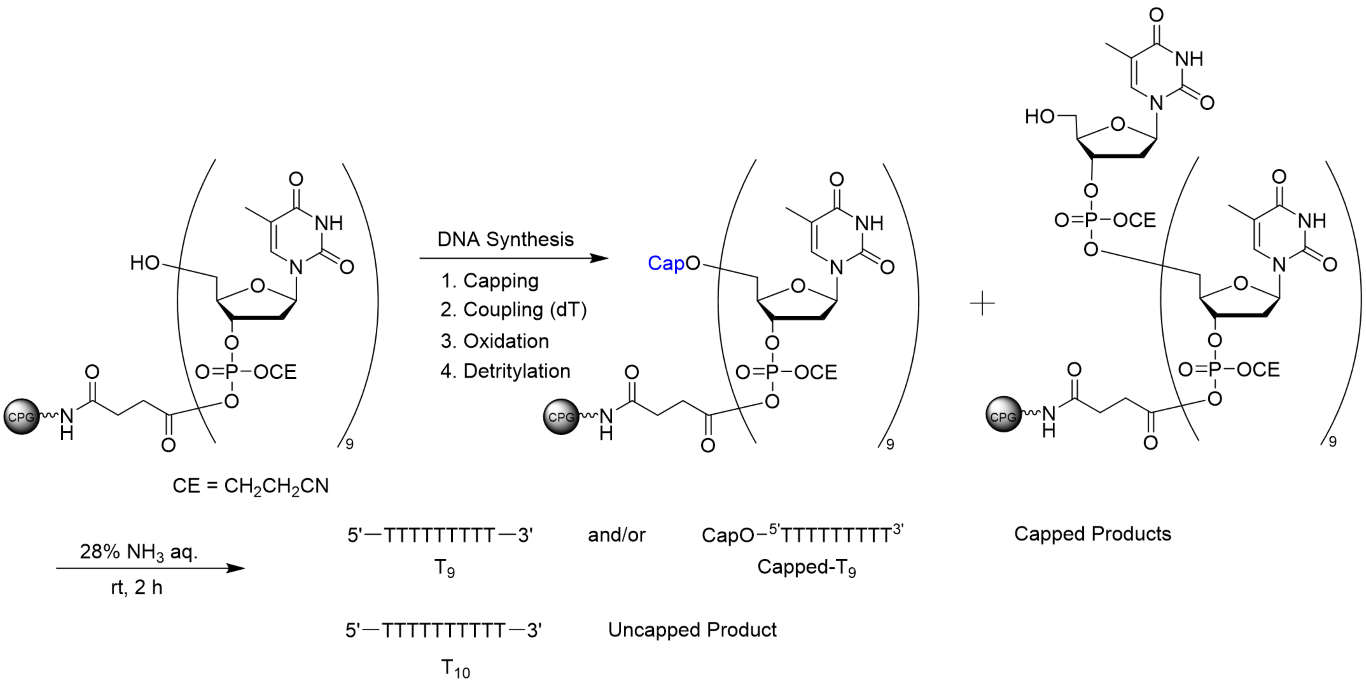
Capping conditions for synthesizing the oligonucleotide
| Capping reagent | Conditions for capping | Reaction time | |
|---|---|---|---|
| (a) |  |
Cap A (Acetic anhydride:THF=9.1:90.9) and Cap B (THF:NMI:Pyridine=8:1:1) |
45 s |
| (b) | 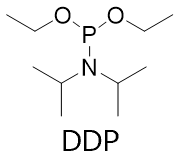 |
0.1 M DDP and 0.25 M ETT (Acetonitrile Solution) |
25 s |
| (c) | 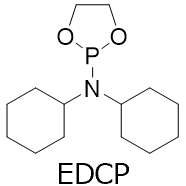 |
0.1 M EDCP and 0.25 M ETT (Acetonitrile Solution) |
25 s |
HPLC analysis
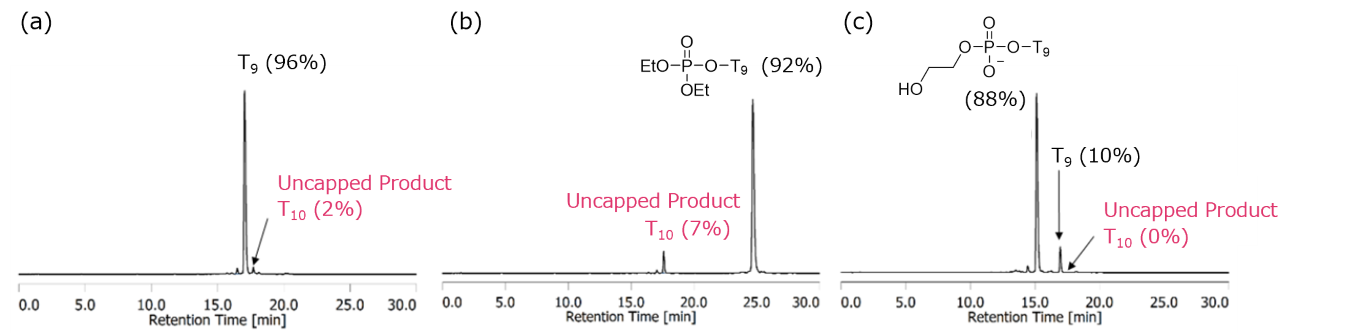
HPLC analysis of the ONs produced from T9-loaded CPG. HPLC analysis conditions : 5-15% Acetonitrile in 0.1 M TEAA (pH 7.0) over a linear gradient for 30 min.
Comparison of capping efficiency for secondary hydroxyl group at the 3′ terminus
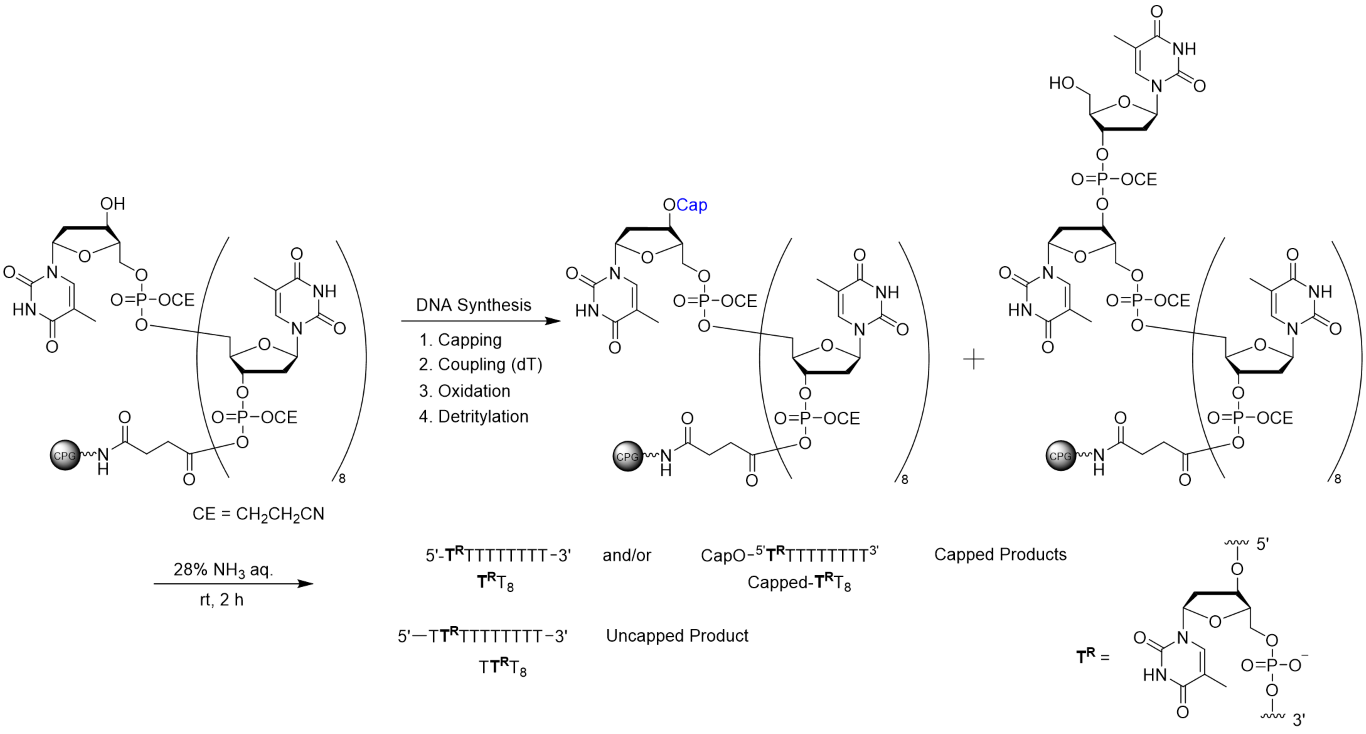
Capping conditions for synthesizing the oligonucleotide
| Capping reagent | Conditions for capping | Reaction time | |
|---|---|---|---|
| (a) | |
Cap A (Acetic anhydride:THF=9.1:90.9) and Cap B (THF:NMI:Pyridine=8:1:1) |
45 s |
| (b) | |
0.1 M DDP and 0.25 M ETT (Acetonitrile Solution) |
25 s |
| (c) | |
0.1 M EDCP and 0.25 M ETT (Acetonitrile Solution) |
25 s |
HPLC analysis
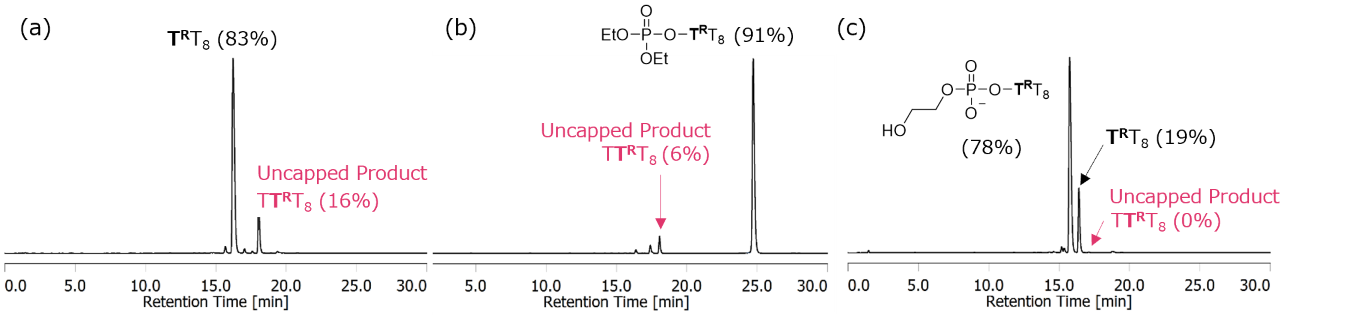
HPLC analysis of the ONs produced from TRT8-loaded CPG. HPLC analysis conditions : 5-15% Acetonitrile in 0.1 M TEAA (pH 7.0) over a linear gradient for 30 min.
Synthesis of 12-mer deoxyoligonucleotide

Capping conditions for synthesizing the oligonucleotide
| Capping reagent | Conditions for capping | Reaction time | |
|---|---|---|---|
| (a) | |
Cap A (Acetic anhydride:THF=9.1:90.9) and Cap B (THF:NMI:Pyridine=8:1:1) |
45 s |
| (b) | |
0.1 M EDCP and 0.25 M ETT (Acetonitrile Solution) |
25 s |
HPLC analysis
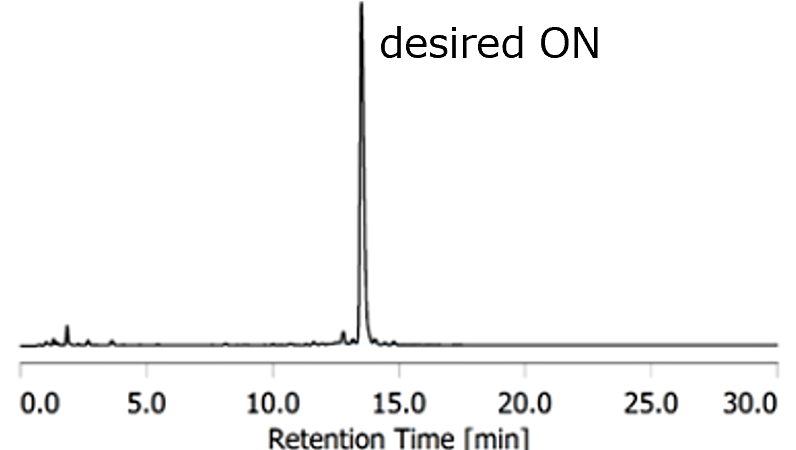
(a) Acetic Anhydride
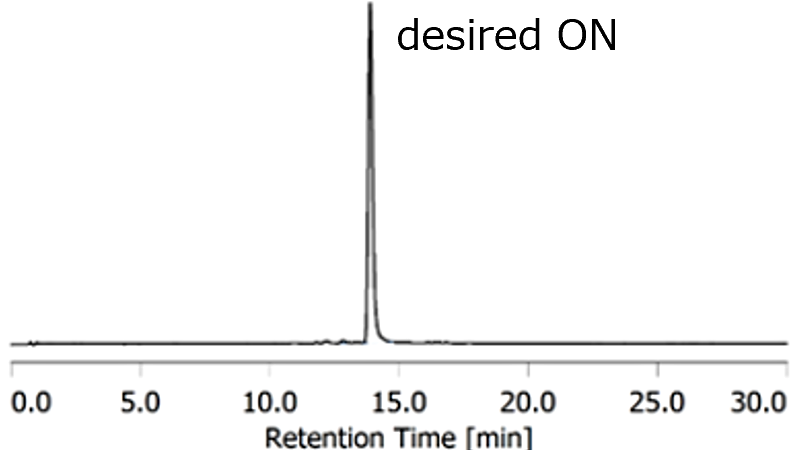
(b) EDCP
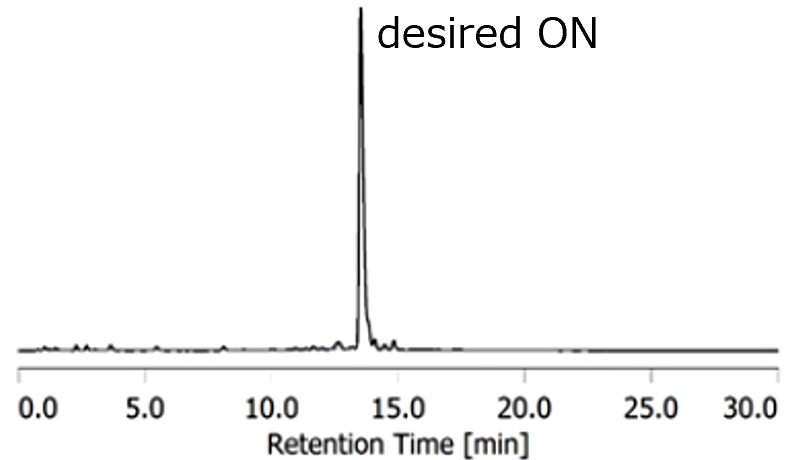
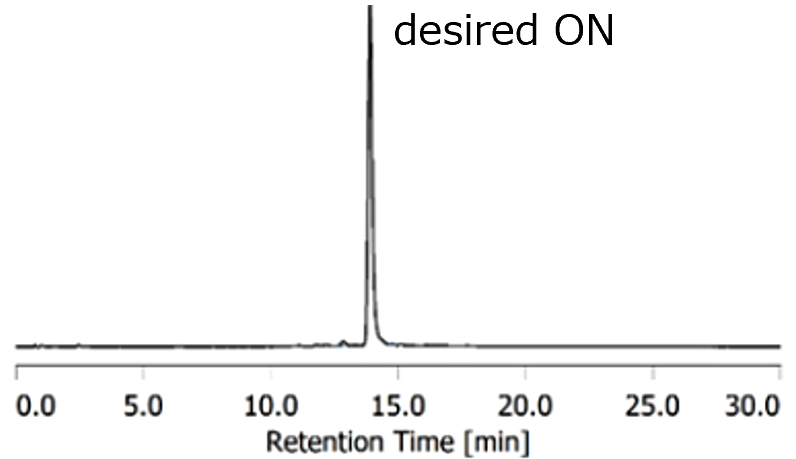
HPLC analysis of the ONs produced from 12mer DNA-loaded CPG. HPLC analysis conditions : 5-15% Acetonitrile in 0.1 M TEAA (pH 7.0) over a linear gradient for 30 min.
Overview / Applications
| Outline | EDCP (Ethano N,N-dicyclohexylphosphoramidite) is a capping reagent for oligonucleotide synthesis, characterized by low steric hindrance and high reactivity. This reagent was developed by the research group of Professor Yoshiyuki Hari at Tokushima Bunri University. Acetyl protection using acetic anhydride is widely used as a capping reagent. However, acetyl-based capping suffers from the problem of impurity generation due to side reactions, such as substitution reactions with the protecting groups on the nucleobase portion. Furthermore, the acetyl capping reaction has low reactivity with secondary alcohols, such as the hydroxyl group of universal linkers or the 3'-hydroxyl group of nucleic acids. Consequently, unreacted species (uncapped nucleotides) remain, contributing to impurities. This product is a novel capping reagent that avoids impurity issues caused by such side reactions and low reactivity. |
|---|---|
| Precautions for Use | Packed on argon gas |
Property
| Appearance | White - nearly white, crystals - powder or mass |
|---|
Manufacturer Information
Alias
- EDCP
Ethano N,N-dicyclohexylphosphoramidite
For research use or further manufacturing use only. Not for use in diagnostic procedures.
Product content may differ from the actual image due to minor specification changes etc.
If the revision of product standards and packaging standards has been made, there is a case where the actual product specifications and images are different.