



CultureSure™ Small Molecules

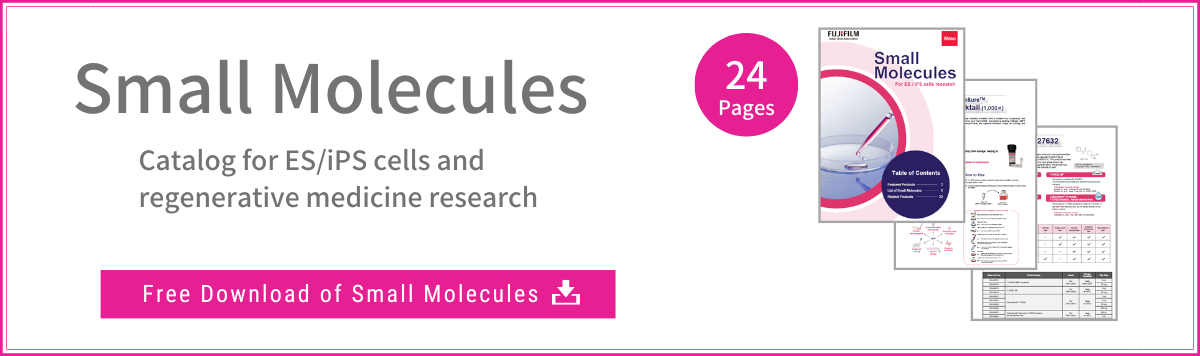
CultureSure™ small molecules are reportedly involved in the processes of ES and iPS cell differentiation and maintaining their capacity to remain undifferentiated. The products are safe to be used in cell culture as their level of cytotoxicity has been checked and they have undergone mycoplasma and endotoxin tests.
Differences Between CultureSure™ and General Reagents
CultureSure™ low molecular weight compounds are animal derived ingredients free products developed specifically for basic research in drug discovery and regenerative medicine, manufactured under ISO 9001 quality management.
In addition to standard tests such as those based on JIS (Japanese Industrial Standard) conducted for general reagents, CultureSure™ undergoes contaminated testing including bacterial endotoxin test and mycoplasma test. Endotoxins and mycoplasma, if introduced into culture media, can affect cell proliferation and function. Since these contaminants are difficult to remove once present, preventive measures before contamination are critically important.
To minimize these risks, CultureSure™ low molecular weight compounds undergo rigorous quality testing for each lot, ensuring reliable and safe use in cell culture applications.
Furthermore, in addition to powder products, we offer a lineup of filter-sterilized ready-to-use solution products. These solution products save time and effort by eliminating the process for weighing and dissolving of powder, and for filter sterilizing, thereby improving operational efficiency.
Product Line Up
A419259 Trihydrochloride
A-83-01
ALK5 InhibitorⅡ (RepSox)
CHIR99021
CKI-7 Dihydrochloride
DAPT
Dorsomorphin
Forskolin
IWP-2
IWR-1-endo
KY03-Ⅰ
PD0325901
Purmorphamine
SAG
SANT-1
SB431542
3,3',5-Triiodo-L-thyronine Sodium Salt (T3)
TTNPB
Y-27632
A419259 Trihydrochloride
C29H34N6O・3HCl=592.00
What is A419259?
A419259 is an inhibitor of Src family kinases. Src is involved in the production of tyrosine kinases that specifically phosphorylate tyrosine residues of proteins. Src family kinases are considered to play important roles in cell development, differentiation and proliferation signaling pathways.
※ Tested for endotoxin, tested negative for mycoplasma
Product Description
- Assay (HPLC): min. 98.0%
- Appearance: white to pale yellowish red, crystalline powder to powder
- Solubility: soluble in DMSO
- Tested negative for mycoplasma
- Endotoxin: less than 0.1 EU/mg
- Storage: room temperature (under inert gas)
A-83-01
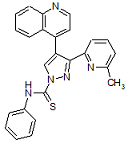
C25H19N5S=421.52
What is A-83-01?
A-83-01 is a selective inhibitor of ALK4, ALK5, and ALK7. It blocks phosphorylation of Smad2/3 and inhibits TGF-β-induced epithelial-to-mesenchymal transition. This product has little to no effect on bone morphogenetic protein type I receptors, p38 MAP kinase, and extracellular signal-regulated kinases. A-83-01 is known to help rat iPS cellscan be long-term cultured in a state maintaining the undifferentiated state.
※ Tested for endotoxin, tested negative for mycoplasma
Product Description
- Assay (HPLC): min. 98.0%
- Appearance: white to yellow, crystalline powder to powder or mass
- Solubility: soluble in DMSO
- Tested negative for mycoplasma
- Endotoxin: less than 0.01 EU/mg
- Storage: -20°C in the dark (under inert gas)
References
Li, W., et al. : Cell Stem Cell, 4, 16 (2009).
Katsuda ,T., et al. : Cell Stem Cell, 20, 41 (2017).
Okae, H., et al. : Cell Stem Cell, 22, 50 (2018).
ALK5 InhibitorⅡ (RepSox)
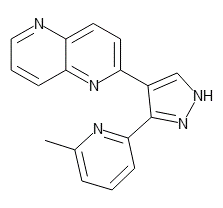
C17H13N5=287.32
What is ALK5 Inhibitor Ⅱ?
ALK5 Inhibitor Ⅱ is a TGF-βR I kinase/ALK5 inhibitor. It can be used as a substitute for Sox2 or c-Myc when generating mouse iPS cells.
※ Tested for endotoxin, tested negative for mycoplasma
Product Description
- Assay (HPLC): min. 98.0%
- Appearance: white to yellowish brown, crystals to powder
- Solubility: soluble in DMSO
- Tested negative for mycoplasma
- Endotoxin: less than 0.05 EU/mg
- Storage: 2-10℃ in the dark (under inert gas)
References
Maherali, N., et al. : Curr. Biol., 19, 1718 (2009).
CHIR99021
C22H18Cl2N8=465.34
What is CHIR99021?
CHIR99021 is a highly selective inhibitor of GSK-3β. The product does not exhibit cross-reactivity against CDKs.
CHIR99021 has been used to maintain effectively undifferentiated ES cells in combination with PD0325901.
It has also been reported to induce differentiation into various cell types, including cardiomyocytes, neurons, and multiple renal progenitor cells. Furthermore, cells induced from human iPS cells using SB431542, CHIR99021, and Dorsomorphin have been shown to exhibit significantly enhanced efficiency and speed in differentiation toward the target cell types.
※ Tested for endotoxin, tested negative for mycoplasma
Product Description (Powder Form)
- Assay (HPLC): min. 97.0%
- Appearance: white to pale brown, crystalline powder to powder
- Solubility: soluble in DMSO and methanol
- Tested negative for mycoplasma
- Endotoxin: less than 0.25 EU/mg
- Storage: -20°C in the dark
Product Description (Liquid Form)
- Appearance: liquid
- Concentration: dissolved in DMSO, 10 mmol/L
- Sterilized with 0.1 μm filter
- Tested for sterility
- Tested negative for mycoplasma
- Endotoxin: less than 2 EU/mL
- Storage: -20°C in the dark
- No animal-derived components were used in the raw materials and in the manufacturing processes
Reference
Ying, QL., et al.: Nature, 453, 519 (2008).
Fujimori, K., et al.: Stem Cell Reports, 9, 1 (2017).
Laco, F., et al.: Stem Cell Reports, 10, 1851 (2018).
Lian, X., et al.: Proc. Natl. Acad. Sci., 109, E1848 (2012).
Tsujimoto, H., et al.: Cell Rep., 31 (2020).
Fujimori, K., et al.: Stem Cell Reports, 9, 1 (2017).
CKI-7 Dihydrochloride
C11H12ClN3O2S・2HCl=358.67
What is CKI-7 Dihydrochloride?
CKI-7 dihydrochloride is one of the isoquinoline sulfonamide, and is an ATP-competitive inhibitor that selectively inhibit casein kinase 1 (CK1). As a serine/ threonine kinase, CK1 regulates various processes such as nuclear export, cell cycle, cell division, and apoptosis. CKI-7 dihydrochloride is known for induce retinal progenitor cells from human ES and iPS cells in combination with SB431542 and Y-27632 under serum-free and feeder-free conditions.
※ Tested for endotoxin, tested negative for mycoplasma
Product Description (Liquid Form)
- Appearance: liquid
- Concentration: dissolved in water, 3 mmol/L
- Sterilized with 0.1 μm filter
- Tested for sterility
- Tested negative for mycoplasma
- Tested for endotoxin: less than 1 EU/mL (for the first lot)
- Storage: -20°C in the dark
- No animal-derived components were used in the raw materials and in the manufacturing processes
Reference
Takahashi, M. et al.: J. Cell Sci., 122, 3169 (2009).
DAPT
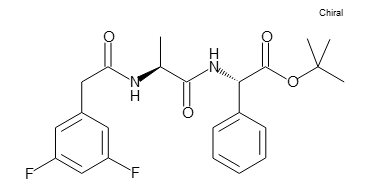
C23H26F2N2O4=432.46
What is DAPT?
DAPT is a γ-secretase inhibitor that inhibits Notch signaling. It induces neural differentiation from ES cell embryoid bodies and preferentially induces cone photoreceptor subtypes in retinal cell differentiation. It is also used as a component of medium when differentiation of brain organoid.
※ Tested for endotoxin, tested negative for mycoplasma
Product Description
- Assay (HPLC): min. 99.0%
- Appearance: white to slightly yellowish brown, crystalline powder to powder or mass
- Solubility: soluble in DMSO
- Tested negative for mycoplasma
- Endotoxin: less than 0.25 EU/mg
- Storage: -20℃
References
Crawford, TQ., et al. : Dev. Dyn., 236, 886 (2007).
Nelson, BR., et al. : Dev. Biol., 304, 479 (2007).
Zerti, D., et al. : Stem Cells, 38, 45 (2020).
Dorsomorphin
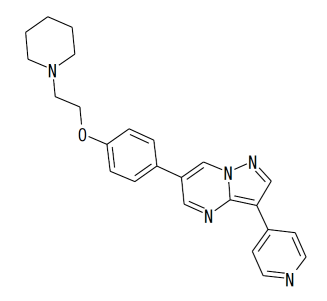
C24H25N5O=399.49
What is Dorsomorphin?
This is a pyrazolopyrimidine compound with cellular permeability. It acts as a potent, selective, reversible, and ATP-competitive inhibitor of AMPK.
It induces neural differentiation from human iPS cells, and cardiomyocytes from mouse ES cells.
It has been reported that human brainstem organoids can be derived from human iPS/ES cells when used in combination this with several other small molecule compounds.
※ Tested for endotoxin, tested negative for mycoplasma
Product Description
- Assay (HPLC): min. 98.0%
- Appearance: white to yellow, crystals to powder
- Solubility: soluble in DMSO
- Tested negative for mycoplasma
- Endotoxin: less than 0.25 EU/mg
- Storage: -20℃ (under inert gas)
References
Chen, Y., et al. : Methods Mol. Biol., 1919, 59 (2019).
Hao, J., et al. : PLOS ONE, 3, e2904 (2008).
Nobuyuki, E., et al. : Front Neurosci., 14, 538 (2020).
Forskolin
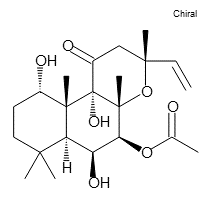
C22H34O7=410.50
What is Forskolin?
Forskolin is an activator of adenylate cyclase. It induces differentiation of mesenchymal stem cells into neurons when used in conjunction with bFGF. It is also used in culture liver organoids.
※ Tested for endotoxin, tested negative for mycoplasma
Product Description
- Assay (HPLC): min. 98.0%
- Appearance: white to slightly yellowish brown, crystalline powder to powder or mass
- Solubility: soluble in DMSO
- Tested negative for mycoplasma
- Endotoxin: less than 0.25 EU/mg
- Storage: 2-10℃
References
Jang, S., et al. : BMC Cell Biol., 11, 25 (2010).
IWP-2
C22H18N4O2S3=466.60
What is IWP-2?
IWP-2 inactivates porcupine (Porcn), a membrane-bound o-acyltransferase (MBOAT), and suppresses palmitoylation of Wnt proteins. As a result, it blocks phosphorylation of Wnt-dependent Lrp-6 receptor and Dvl2, and accumulation ofβ-catenin. It is known that it promotes differentiation of human iPS cells into cardiomyocytes.
※ Tested negative for mycoplasma
Product Description
- Assay (HPLC): min. 98.0%
- Appearance: white to pale brown, crystals to powder
- Solubility: soluble in DMSO
- Tested negative for mycoplasma
- Storage: 2-10 °C in the dark (under inert gas)
Reference
Minami, I. et al.: Cell Rep., 2, 1448 (2012).
IWR-1-endo
C25H19N3O3=409.44
What is IWR-1-endo?
IWR-1-endo is an inhibitor of Wnt signaling. IWR-1 stabilizes the complex composed of Axin2, Apc, Ck1, and Gsk3β that degrades β-catenin. As a result, it promotes degradation of β-catenin.
※ Tested for endotoxin, tested negative for mycoplasma
Product Description
- Assay (HPLC): min. 98.0%
- Appearance: white to pale yellow, crystalline powder to powder
- Solubility: soluble in DMSO
- Tested negative for mycoplasma
- Endotoxin: less than 0.25 EU/mg
- Storage: -20 °C in the dark (under inert gas)
KY03-Ⅰ
C19H19IN2O3S=482.34
What is KY03-I?
KY03-I is an inhibitor of Wnt. It is known that KY02111 induces differentiation of human ES and iPS cells into cardiomyocytes. Compared with KY02111, KY03-I induces differentiation of ES/ iPS cells into cardiomyocytes in a more efficient manner and at a lower concentration.
※ Tested for endotoxin, tested negative for mycoplasma
Product Description
- Assay (HPLC): min. 98.0%
- Appearance: white to pale gray, crystalline powder to powder
- Solubility: soluble in DMSO
- Tested negative for mycoplasma
- Endotoxin: less than 0.01 EU/mg
- Storage: -20 °C in the dark (under inert gas)
Reference
Minami, I. et al.: Cell Rep., 2, 1448 (2012).
PD0325901
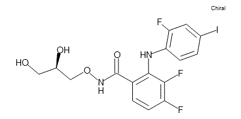
C16H14F3lN2O4=482.19
What is PD0325901?
PD0325901 is a MAPK inhibitor with potent antitumor activity.
It induces phosphorylation of MAPK, inhibition of its activation and inhibition of tumor cell proliferation. PD0325901 inhibits MAPK activity without adverse reactions.
Addition of this product and CHIR99021 to a culture medium results in efficient culture of mouse ES cells.
It has been reported that use of this product with SB431542 and thiazovivin not only improves reprogramming efficiency 200 folds or more but also accelerates reprogramming speed.
※ Tested for endotoxin, tested negative for mycoplasma
Product Description
- Assay (HPLC): min. 99.0%
- Appearance: white to pale brown, crystals to powder
- Solubility: soluble in DMSO
- Tested negative for mycoplasma
- Endotoxin: less than 0.25 EU/mg
- Storage: -20℃ (under inert gas)
References
Lin, T., et al. : Nat. Methods, 6, 805 (2009).
Ying, QL., et al. : Nature, 453, 519 (2008).
Koehler, KR., et al. : Nat. Protoc., 9, 1229 (2014).
Purmorphamine
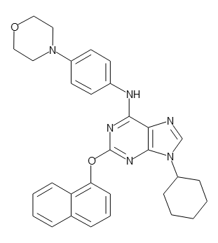
C31H32N6O2=520.62
What is Purmorphamine?
Purmorphamine is an agonist of hedgehog signaling. Induces differentiation of mesenchymal progenitor cells and preosteoblast cells into osteoblasts.
※ Tested for endotoxin, tested negative for mycoplasma
Product Description
- Assay (HPLC): min. 98.0%
- Appearance: white to pale brown or bluish purple, crystalline powder to powder or mass
- Solubility: soluble in DMSO
- Tested negative for mycoplasma
- Endotoxin: less than 0.25 EU/mg
- Storage: -20℃
References
Wu, X., et al. : Chem. Biol., 11, 1229 (2004).
CultureSure™ SAG
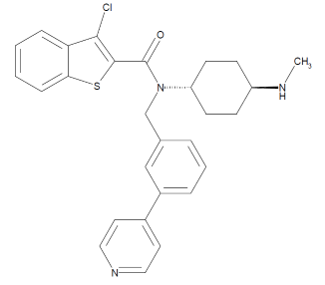
C28H28ClN3OS = 490.06
What is SAG?
SAG is a cell-permeable Smoothened (Smo) agonist that activates the Sonic Hedgehog (Shh) signaling pathway. It has been reported to induce differentiation of ES/iPS cells into neurons, chondrocytes, and three-dimensional spinal cord tissue.
Product Description
- Assay (HPLC): min. 99.0%
- Appearance: white to pale brown, crystals to powder
- Solubility: soluble in DMSO
- Tested negative for mycoplasma
- Endotoxin: less than 0.25 EU/mg
- Storage: -20℃ (under inert gas)
Reference
Lau, ST., et al. : Gastroenterology, 157 (6), 1556 (2019).
Kanke, K., et al. : Stem Cell Reports, 2 (6), 751 (2014).
Xue, W., et al. : iScience, 26 (1), 104 (2023).
SANT-1
C23H27N5=373.49
What is SANT-1?
SANT-1 is a Sonic hedgehog signal inhibitor. It is known that it used in the process of inducing differentiation into pancreatic islet beta cells.
Product Description
- Appearance::white to yellow, crystals to powder
- Assay (HPLC): min. 99.0%
- Solubility: soluble in DMSO
- Endotoxin: less than 0.25 EU/mg
- Tested negative for mycoplasma
Reference
Leonardo, VC., et al.: Stem Cell Reports., 12(2), 351 (2019).
Federica, F., et al.: Front. Cell Dev. Biol., 10, 967765 (2022).
SB431542
C22H16N4O3=384.39
What is SB431542?
SB431542 is a selective inhibitor of TGF-β superfamily type 1 activin receptor-like kinase (ALK) and inhibits ALK4, 5, and 7. It is known that it stimulates proliferation, differentiation and sheet formation of ES cells-derived endothelial cells. It is also known that the use of SB431542 with thiazovivin and PD0325901 improves reprogramming efficiency to more than 200 times and accelerates reprogramming speed.
※ Tested for endotoxin, tested negative for mycoplasma
Product Description (Powder Form)
- Assay (HPLC): min. 98.0%
- Appearance: white to slightly yellowish brown, crystalline powder to powder
- Solubility: soluble in DMSO
- Tested negative for mycoplasma
- Endotoxin: less than 0.05 EU/mg
- Storage: -20 °C in the dark
Product Description (Liquid Form)
- Appearance: liquid
- Concentration: dissolved in DMSO, 5 mmol/L
- Sterilized with 0.1 μm filter
- Tested for sterility
- Tested negative for mycoplasma
- Tested for endotoxin: less than 2 EU/mL (for the first lot)
- Storage: -20°C in the dark
- No animal-derived components were used in the raw materials and in the manufacturing processes
References
Ogawa, K., et al. : J. Cell. Sci.,120, 55 (2007).
Lin T., et al. : Nat. Methods, 6, 805 (2009).
Fujimori, K., et al. : Stem Cell Reports., 9, 1 (2017).
Okae, H., et al. : Cell Stem Cell, 22, 50 (2018).
3,3',5-Triiodo-L-thyronine Sodium Salt (T3)
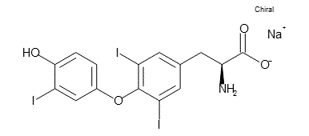
C15H11I3NNaO4=672.96
What is 3,3',5-Triiodo-L-thyronine Sodium Salt (T3)?
It is one of the thyroid hormones. It signals by binding to nuclear receptors and regulating the expression of a wide range of gene products.
It promotes differentiation of oligodendrocyte progenitor cells or maturation of human iPS cell-derived cardiomyocytes. Thyroid hormone signaling has also been reported to act on cone subtype determination in retinal cell differentiation.
※ Tested for endotoxin, tested negative for mycoplasma
Product Description
- Assay (HPLC): min. 98.0%
- Appearance: white to pale yellowish brown or reddish brown, crystalline powder to powder
- Solubility: soluble in DMSO
- Tested negative for mycoplasma
- Endotoxin: less than 0.25 EU/mg
- Storage: -20℃ (under inert gas)
References
Marta, CB., et al. : J. Neurosci. Res., 53, 251 (1998).
Yang, X., et al. : J. Mol. Cell. Cardiol., 72, 296 (2014).
Eldred, KC., et al. : Science, 362, eaau6348 (2018).
TTNPB
C24H28O2=348.48
What is TTNPB?
TTNPB is a selective retinoic acid receptor agonist inhibitor. It is known that it used in the process of inducing differentiation into renal cells, nephron progenitor cells, and pancreatic islet beta cells.
Product Description
- Appearance:White to nearly white, crystals to powder
- Assay (HPLC): min. 99.0%
- Solubility: soluble in DMSO
- Endotoxin: less than 0.25 EU/mg
- Tested negative for mycoplasma
- Storage: -20°C (under inert gas)
References
Toyohara, T., et al.: Stem Cells Transl. Med., 4(9), 980 (2015).
Toyoda, T., et al.: Stem Cell Reports, 9(2), 419 (2017).
Y-27632
C14H21N3O・2HCl・H2O=338.27
What is Y-27632?
Y-27632 is a selective and potent inhibitor of ROCK. It induces various activities such as contraction of vascular smooth muscle cells via ROCK signaling pathways. Furthermore, it suppresses the cell death of of ES and iPS cells at cell dispersion, and that it improves cell survival after cryopreservation. [ROCK:Rho-associated coiled-coil forming kinase / Rho-linked kinase/ serine/threonine protein kinase]
※ Tested for endotoxin, tested negative for mycoplasma
Product Description (Powder Form)
- Assay (HPLC): min. 98.0%
- Appearance: white to pale yellow, crystalline powder to powder
- Solubility: soluble in water and ethanol
- Specific rotation [α]D20 (c=0.5, CH3OH): +2 to +10°
- Tested negative for mycoplasma
- Endotoxin: less than 0.25 EU/mg
- Storage: -20 °C in the dark (under inert gas)
Product Description (Liquid Form)
- Appearance: liquid
- Concentration: dissolved in water, 10 mmol/L
- Sterilized with 0.1 μm filter
- Tested for sterility
- Tested negative for mycoplasma
- Endotoxin: less than 3EU/mL
- Storage: -20°C in the dark
- No animal-derived components were used in the raw materials and in the manufacturing processes
Our Y-27632 products lineup (including GMP products)
References
Uehata, M., et al. : Nature, 389, 990 (1997).
Sakamoto, K., et al. : J. Pharmacol. Sci., 92, 56 (2003).
Nishimaru, K., et al. : J. Pharmacol. Sci., 92, 424 (2003).
Watanabe, K., et al. : Nat. Biotechnol., 25, 681 (2007).
Martin-Ibanez, R., et al. : Hum. Reprod., 23, 2744 (2008).
Claassen, DA., et al. : Mol. Reprod. Dev., 76, 722 (2009).
Kawamata, M., et al. : Proc. Natl. Acad. Sci. USA., 107, 14223 (2010).
Ito, H., et al. : Liver Int., 32, 592 (2012).
Katsuda,T., et al. : Cell Stem Cell, 20, 41 (2017).
Okae, H., et al. : Cell Stem Cell, 22, 50 (2018).
Ogawa, K., et al. : Sci. Rep., 8, 3615 (2018).
Ayabe, H., et al. : Stem Cell Reports., 11, 306 (2018).

Product List
- Open All
- Close All
For research use or further manufacturing use only. Not for use in diagnostic procedures.
Product content may differ from the actual image due to minor specification changes etc.
If the revision of product standards and packaging standards has been made, there is a case where the actual product specifications and images are different.
The prices are list prices in Japan.Please contact your local distributor for your retail price in your region.