



MOF Materials


In 2025, three researchers, including Professor Susumu Kitagawa from Kyoto University, were awarded the Nobel Prize in Chemistry for their contributions to the development of Metal-Organic Frameworks(MOFs).
MOFs feature nanoscale-controlled pores that enable the selective storage, separation, and transformation of specific molecules. Thanks to these unique properties, research applications have advanced in areas such as gas adsorption (e.g., CO2 capture) and drug delivery systems containing active ingredients.
Here, we proudly present MOFs from Atomis, a Japanese startup specializing in next-generation porous materials including MOFs.
Professor Kitagawa serves as a technical advisor to Atomis, which now has its own factory capable of producing 20 tons of MOFs annually.
About MOFs
MOFs are a general term for materials characterized by nanoscale-controlled porosity, where metal ions and organic ligands form a continuous, regularly arranged 3D structure. The metal ions create nanosized cavities by cross-linking with organic ligands, resulting in a crystalline polymer structure with a high specific surface area.
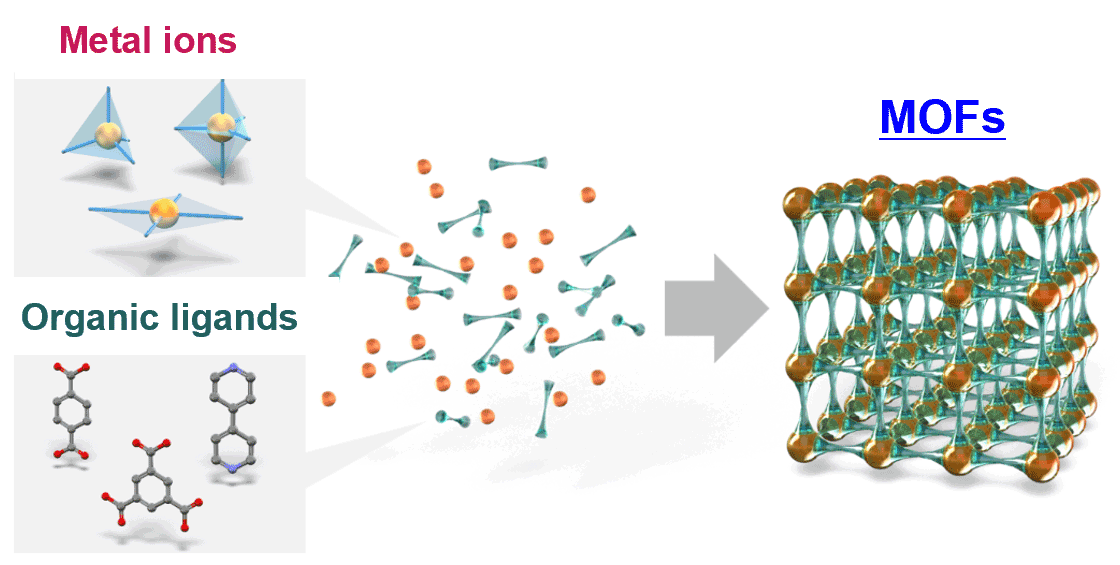
Key Feature: High Flexibility in Pore Design
One of the key features of MOFs is that their pore space can be freely designed by selecting different metal ions and organic ligands, allowing functions to be flexibly tailored to suit specific applications.
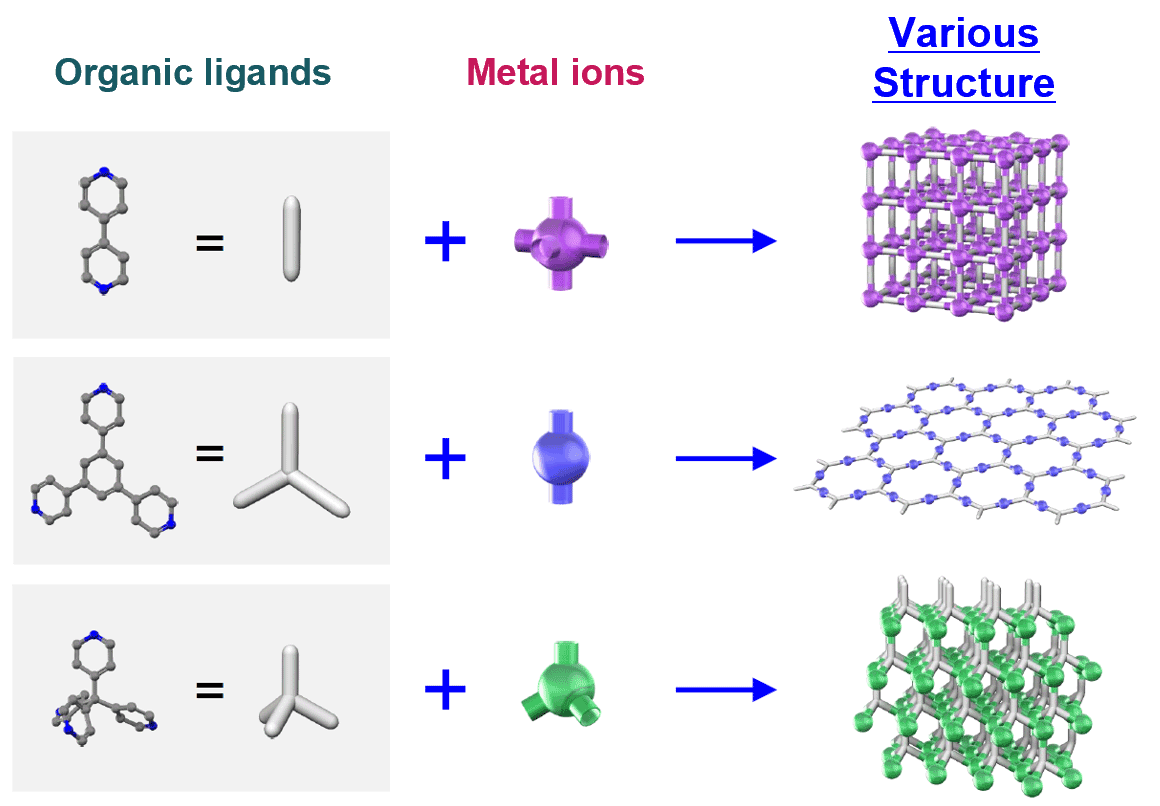
Comparison With Other Porous Materials
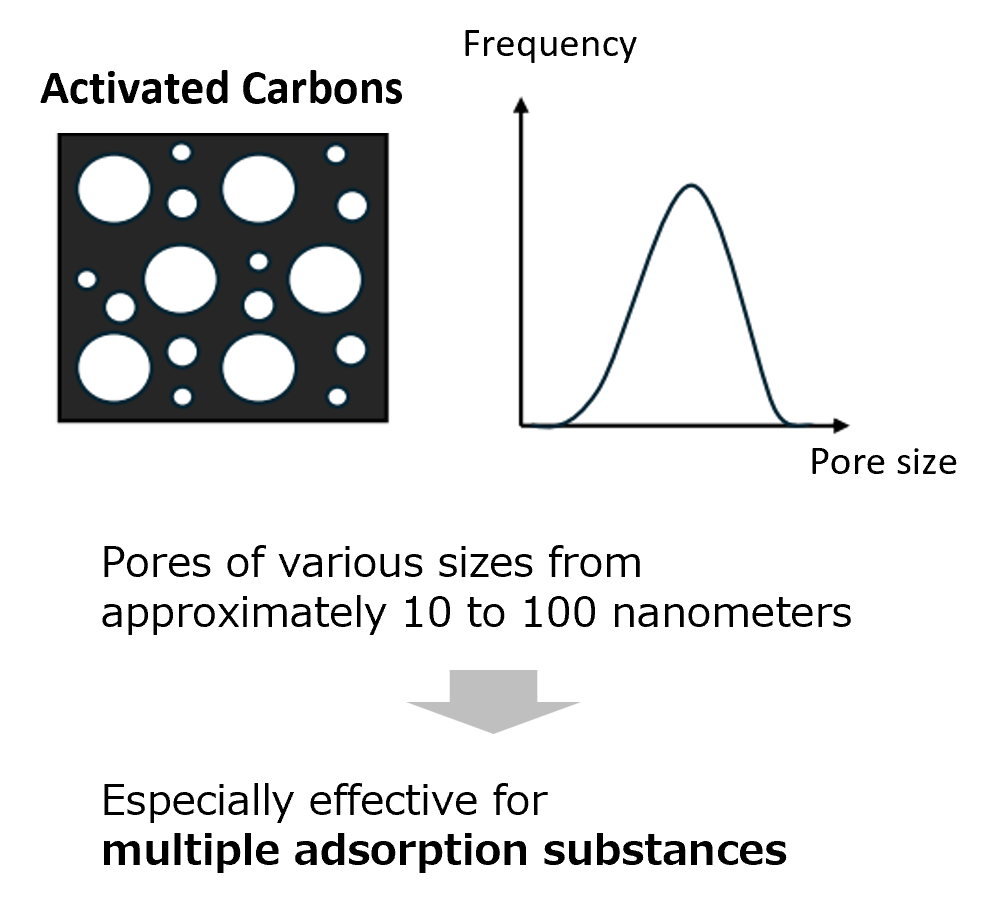
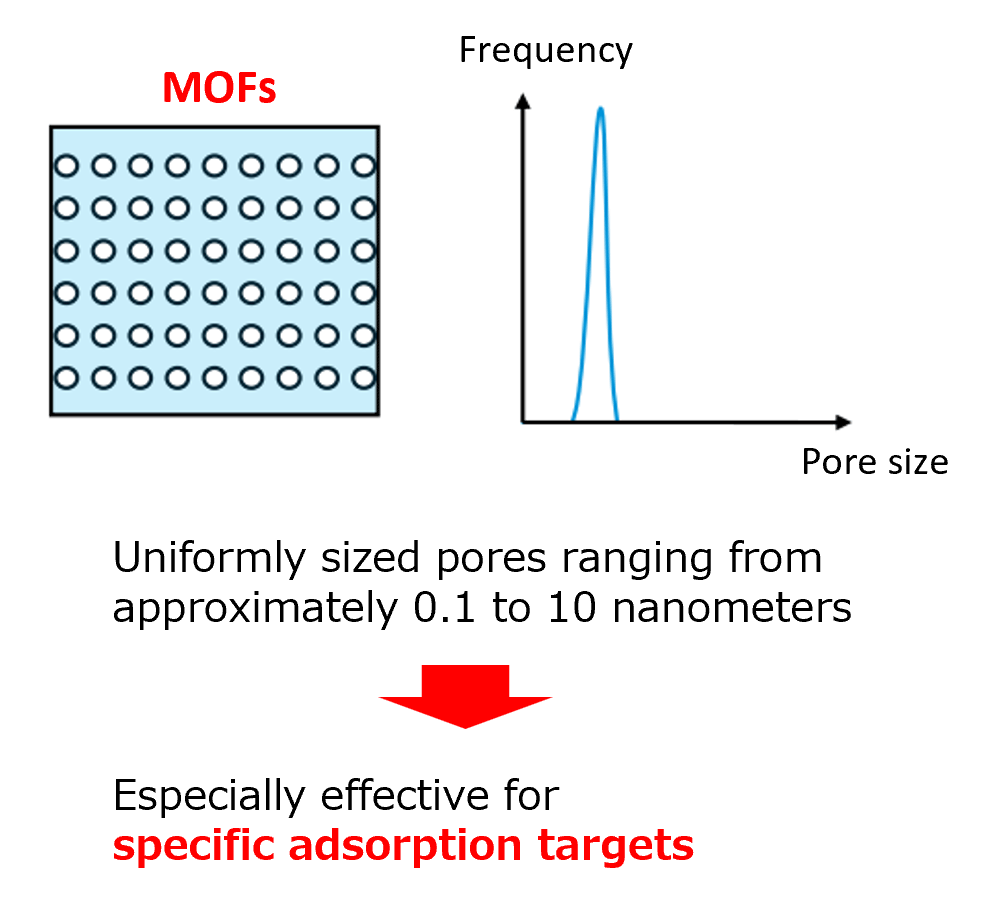
Using MOFs is especially effective for targeting specific adsorption because it possesses uniformly sized pores ranging from approximately 0.1 to 10 nanometers.
<Physical properties >
| Activeted Carbons |
Zeolites | MOFs | |
|---|---|---|---|
| Pore size distribution | Broad | Narrow | Narrow |
| Pore size (nm) |
10 - 200 | 0.2 - 10 | 0.4 - 6 |
| Specific surface area (m2/g) |
500 - 2,500 | 100 - 700 | Max 7,140 |
<Pore image>
Product Details
| Code No. | AP0008 | AP0010 |
|---|---|---|
| MOFs | ZIF-8 Zinc/2-Methylimidazole |
UiO-66 Zirconium/1,4-Dicarboxybenzene |
| Structure | 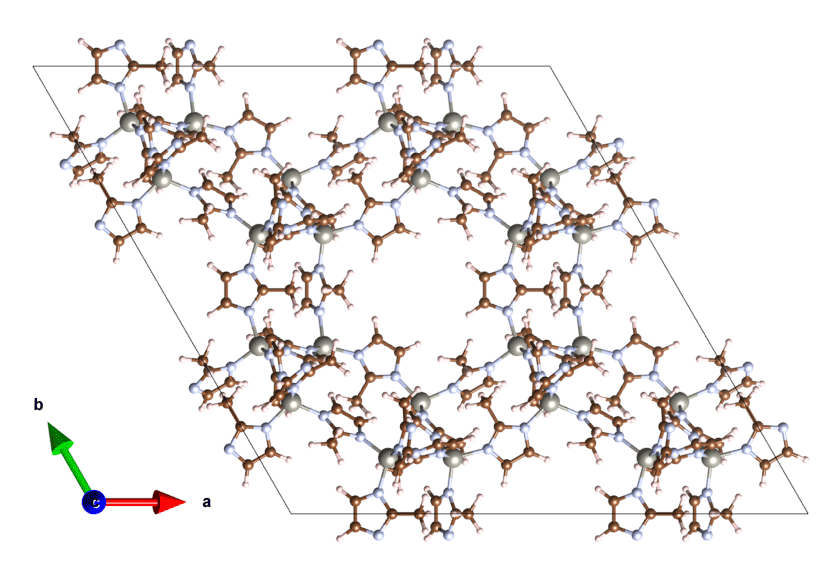 |
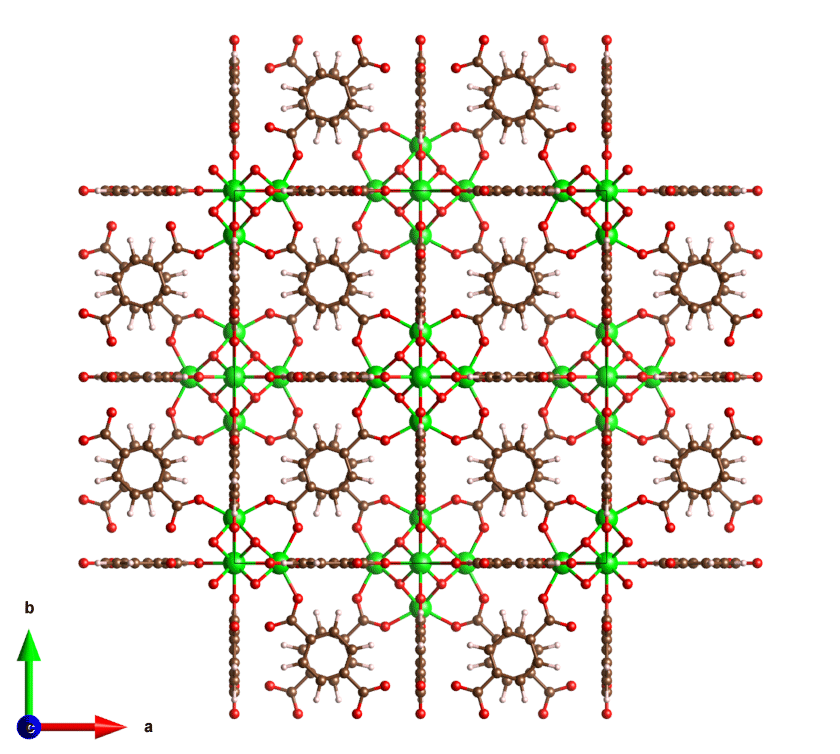 |
| Physical Properties |
|
|
| Applications |
|
|
| Code No. | AP0015 | AP0020 |
|---|---|---|
| MOFs | ZIF-67 Cobalt/2-Methylimidazole |
MOF-74(Ni) Nickel/2,5-Dihydroxyterephthalic acid |
| Structure | 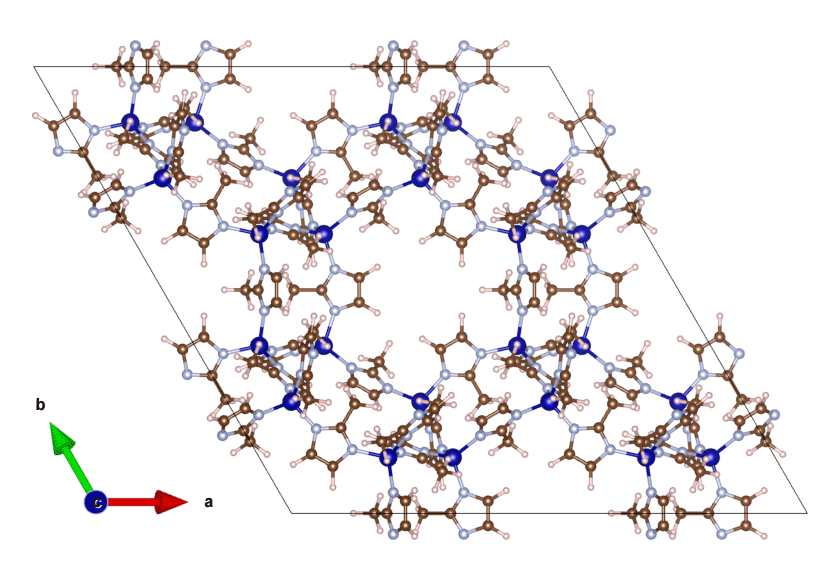 |
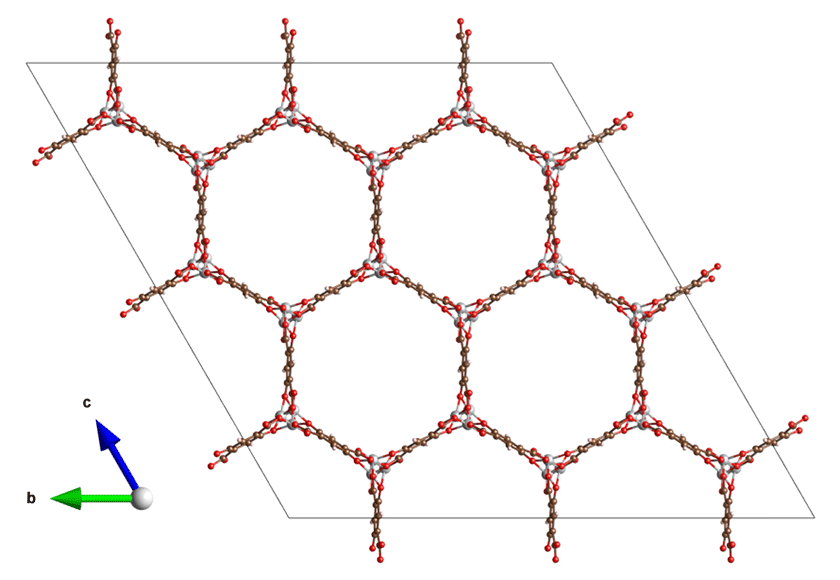 |
| Physical Properties |
|
|
| Applications |
|
|
| Code No. | AP0031 | AP0032 |
|---|---|---|
| MOFs | MOF-74(Co) Cobalt/2,5-Dihydroxyterephthalic acid |
MOF-74(Zn) Zinc/2,5-Dihydroxyterephthalic acid |
| Structure | 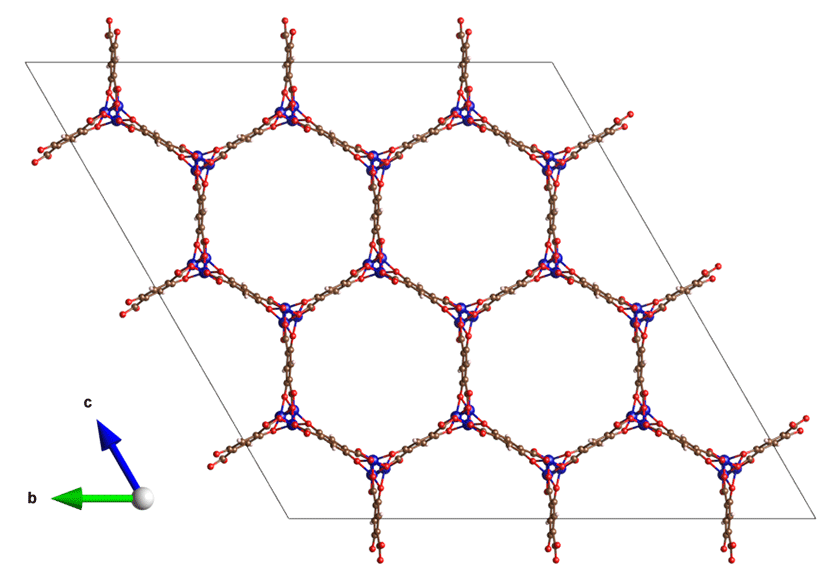 |
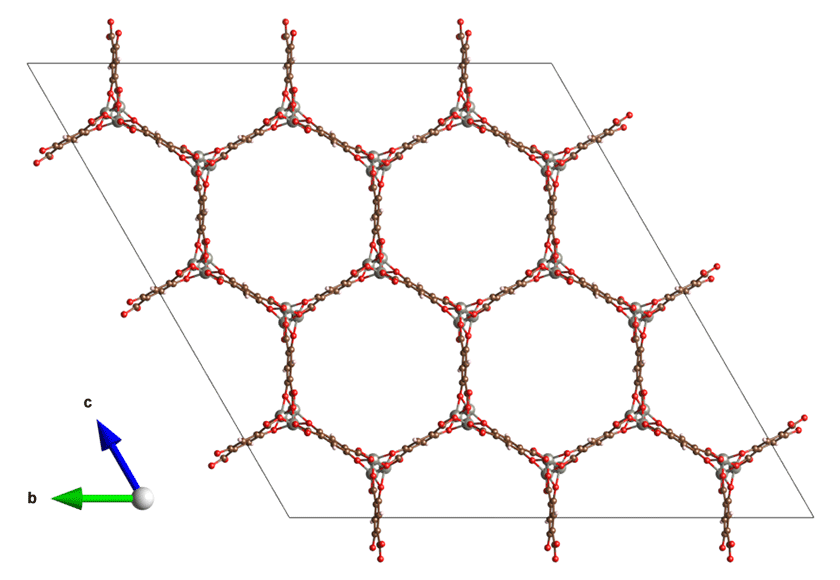 |
| Physical Properties |
|
|
| Applications |
|
|
| Code No. | AP5017 | |
|---|---|---|
| MOFs | MOF-74(Mg) Magnesium/2,5-Dihydroxyterephthalic acid |
|
| Structure | 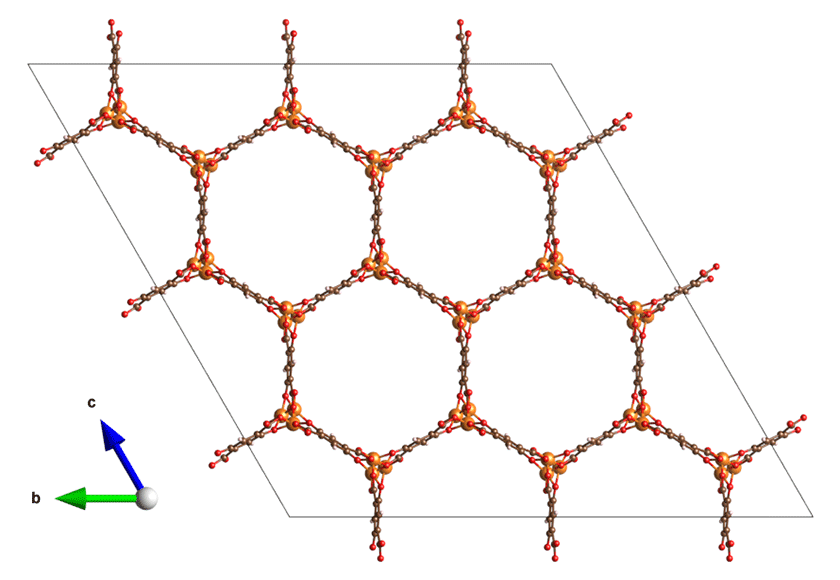 |
|
| Physical Properties |
|
|
| Applications |
|
Product List
- Open All
- Close All
MOFs
For research use or further manufacturing use only. Not for use in diagnostic procedures.
Product content may differ from the actual image due to minor specification changes etc.
If the revision of product standards and packaging standards has been made, there is a case where the actual product specifications and images are different.