



BlotGlyco™ Glycan Purification and Labelling Kit
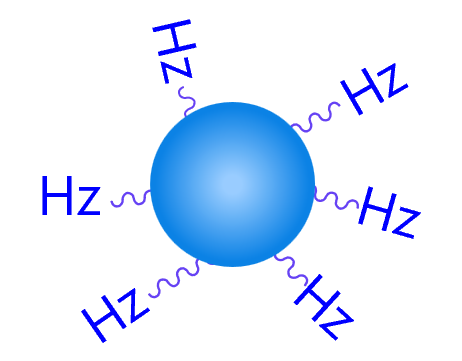
*HZ: -NHNH₂
BlotGlyco™ enables the selective capture and purification of glycans from biological samples--such as biological tissues and natural products--that contain a high level of impurities, by chemically linking the hydrazide groups on the glycan-capturing polymer beads to the aldehyde groups at the ends of the glycans. BlotGlyco™ can be widely utilised not only for the analysis of glycan modifications in biopharmaceuticals, but also for the discovery of glycan biomarkers and research into stem cell glycomics.
Features
- Enables the purification of glycans from biological samples (such as serum, cells and tissues) containing high levels of contaminants
- Enables the analysis of glycans within SDS-PAGE gel bands
- Purification and labelling can be completed within a single tube in approximately 5 hours
Applications
- Analysis of glycan modifications in biopharmaceuticals (research and development, quality control)
- Glycan analysis of stem cells
- Screening for biomarkers derived from biological samples
- Glycan analysis within electrophoresis bands (proteomics)
Glycans are important as biomarkers for various cellular functions and diseases; however, conventional analytical methods have made it difficult to accurately analyse complex N-linked glycans. High-purity sample preparation is essential for accurate glycan analysis using techniques such as HPLC and LC-MS.
Kit Contents
| Catalog No. | Product Name | Polymer beads | Reaction spin tube | Cleanup Column | Operating Protocol |
|---|---|---|---|---|---|
| BS-45408Z | BlotGlyco 100C | 100Tests | - | - | 1ea |
| BS-45409Z | BlotGlyco 100D | 100Tests | - | 100 | 1ea |
| BS-45410Z | BlotGlyco 200C | 200Tests | - | - | 1ea |
| BS-45411Z | BlotGlyco 100E | 100Tests | 100 | - | 1ea |
| BS-45414Z | BlotGlyco 10B | 10Tests | 10 | 10 | 1ea |
| BS-45415Z | BlotGlyco 50B | 50Tests | 50 | 50 | 1ea |
Workflow for glycan purification using BlotGyco™
By utilising the chemical bond between polymer beads—which contain a high density of Hz (hydrazide groups) for glycan capture—and the aldehyde groups at the ends of the glycans, it is possible to purify only the glycans from bio-derived samples containing a high level of contaminants, such as biological tissues and natural products, and to label them.
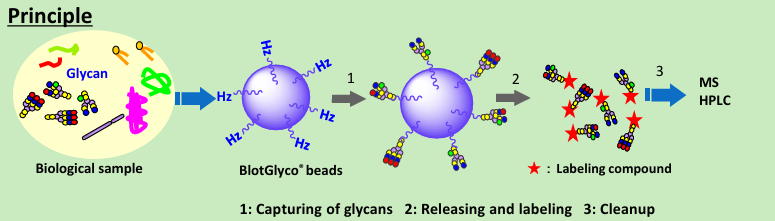
- Glycan chains are purified by utilising the chemical bond between the hydrazide group on the polymer beads and the aldehyde group at the terminus of the glycan chain. Consequently, glycan chains can be purified efficiently even in the presence of contaminants such as peptides.
- By fragmenting the sample proteins into peptide fragments via trypsin digestion, the efficiency of N-glycosidase can be maximised. This enables the comprehensive recovery and analysis of the glycan chains from the proteins.
Examples of glycan analysis in biological samples
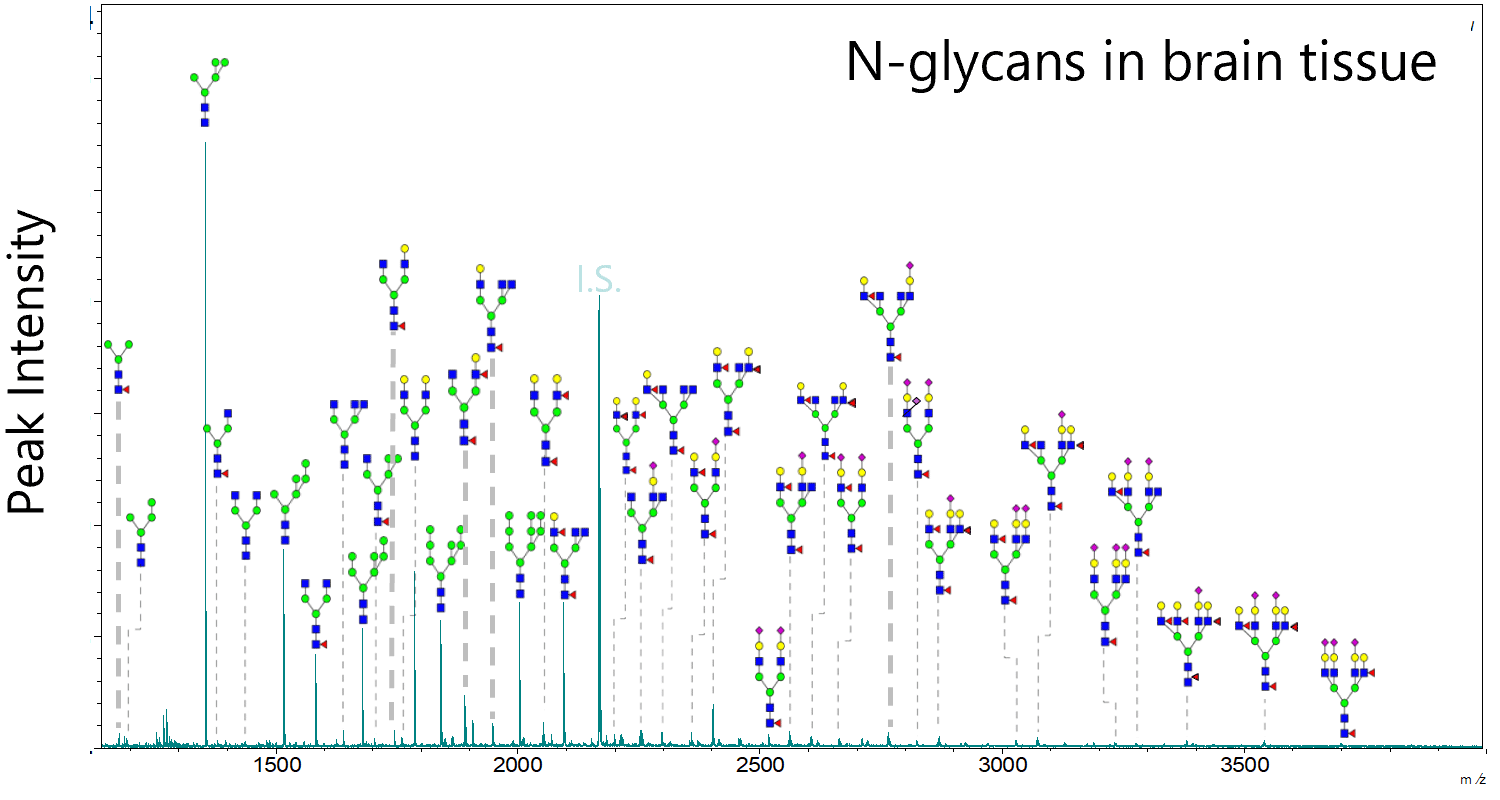
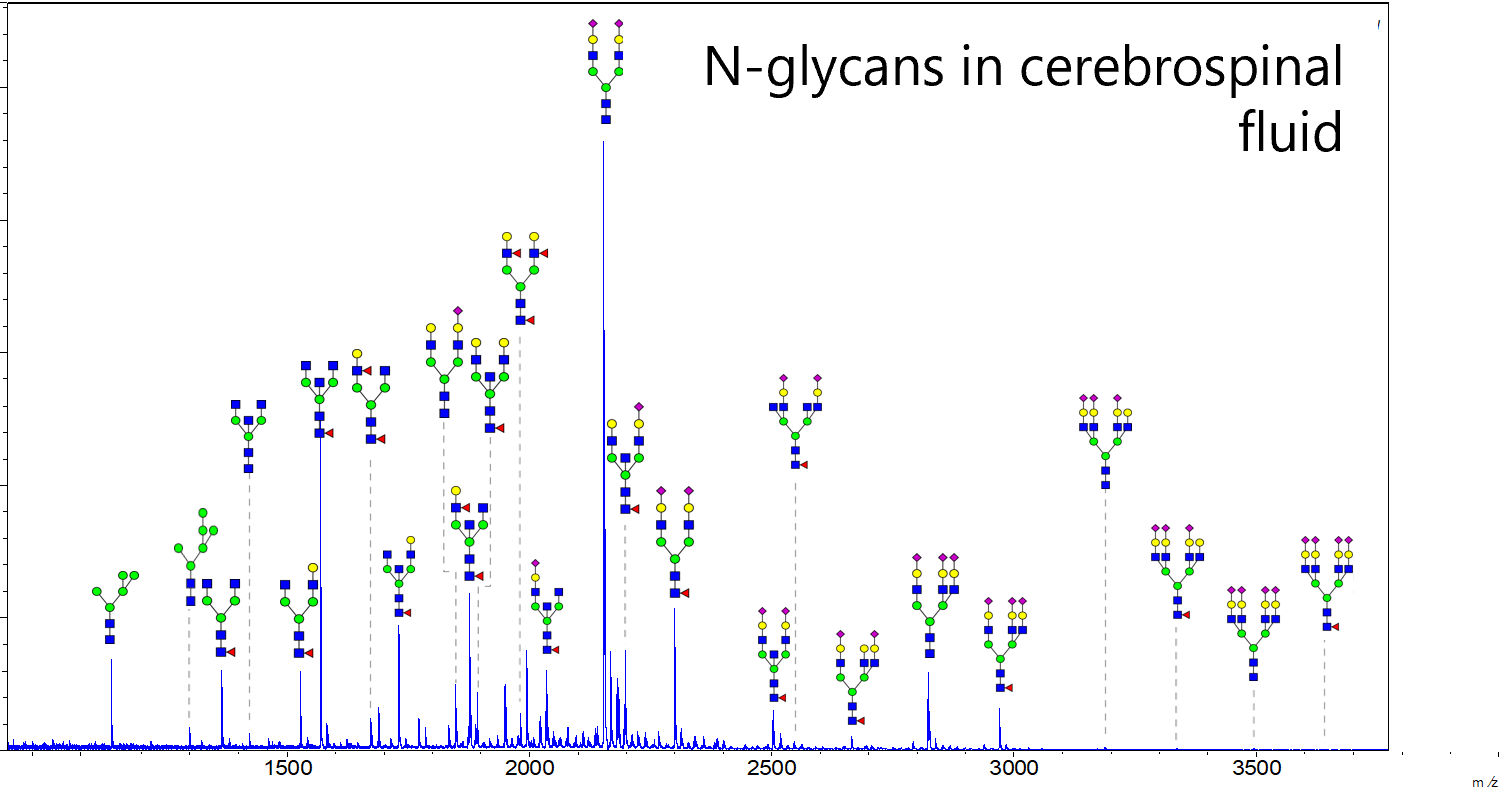
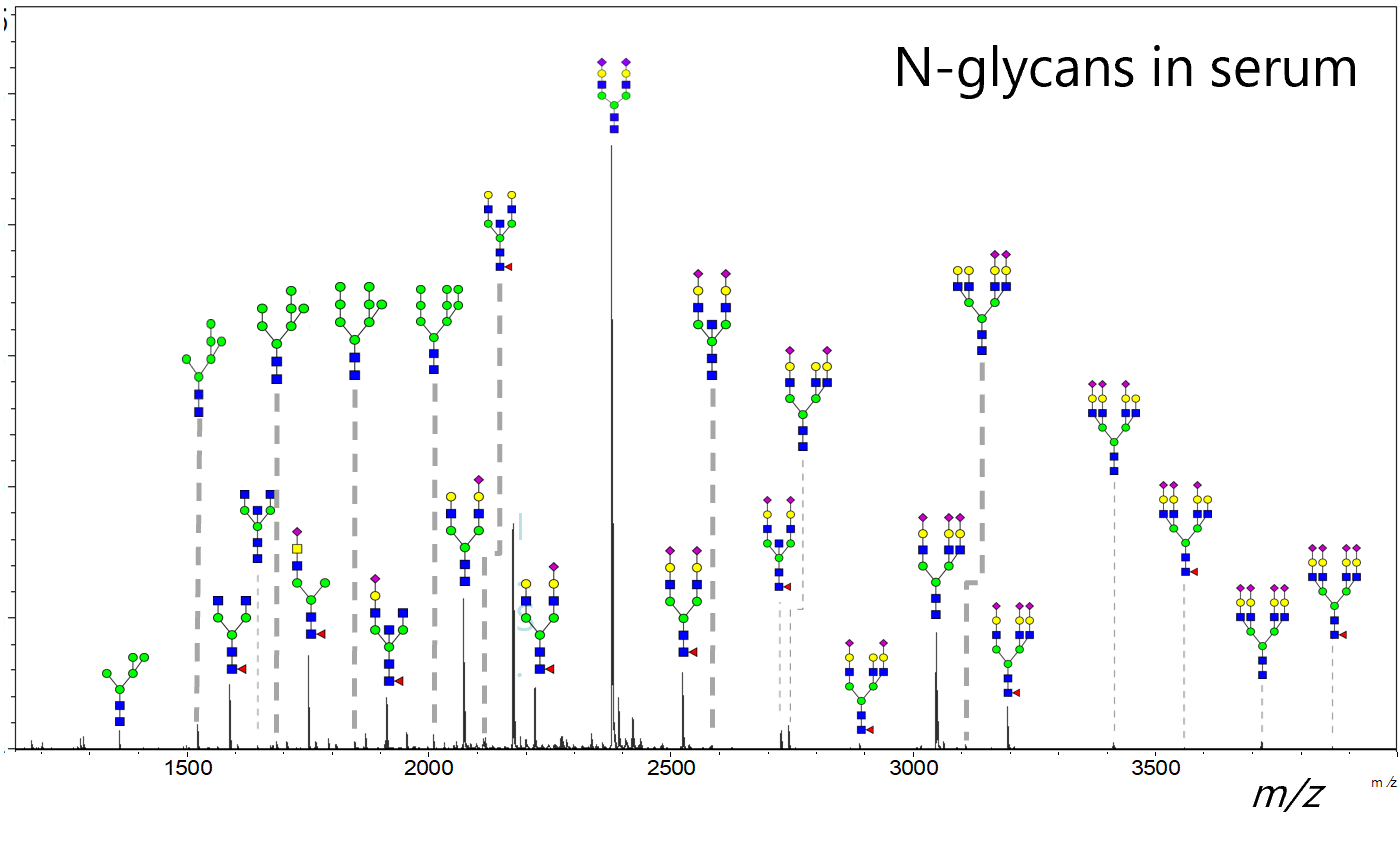
- A key feature of BlotGlyco is its ability to pre-process glycan samples derived from biological sources (such as serum, cells and tissues) that contain a high level of contaminants.
- It is also suitable for the analysis of glycan chains in biologics where it is difficult to release the glycan chains via a direct N-glycosidase reaction (e.g. glycan chains in certain Fc-fusion proteins and glycan chains in the Fab region of IgG).
Paper Overview
Makino R, Natsuka S.: PLoS One. 2025 20(12) : e0336565. https://doi.org/10.1371/journal.pone.0336565
Optimizing the preparation of labeled N-glycans for rapid, simplified, and high-precision analysis
Background
Glycan structures show great potential as biomarkers for the early detection of diseases, as they sensitively reflect changes in cellular states. However, traditional glycan analysis has been challenging due to its complexity, time-consuming processes, and reliance on hazardous chemicals, such as those used in hydrazinolysis methods. These limitations have hindered its broader application and use in interdisciplinary research.
Research Achievements
Authors focused on developing a simple, accurate N-glycan analysis method capable of handling high-throughput sample processing. A central feature of this study is the use of pyridylamination, a fluorescent labeling technique that significantly enhances isomer separation efficiency in reversed-phase LC/MS. This approach improves the precision of glycan profiling, which is critical for identifying subtle differences in glycan structures. Through a thorough comparison of methods for N-glycan release and purification, we determined that Rapid PNGase F (New England Biolabs) and BlotGlyco™ (Sumitomo Bakelite) were the most suitable tools for this application. To further enhance accuracy, we optimized the BlotGlyco protocol by modifying the manufacturer's standard instructions, effectively reducing artifact formation during the analysis process.
Using this optimized workflow, they successfully analyzed glycan profiles from human serum, human urine, and CHO-K1 membrane fractions. This demonstrated that unique glycan structures specific to each sample type could be efficiently separated and accurately quantified. These results validate the method's capability to handle diverse biological samples while maintaining high precision and reproducibility.
This study highlights a robust and user-friendly approach to glycan analysis, which addresses key technical barriers and opens the door for broader adoption across various research fields, including biomarker discovery and glycomics. The optimized workflow offers researchers a powerful tool to explore glycan structures and their roles in biological systems, supporting advancements in diagnostics and disease understanding.
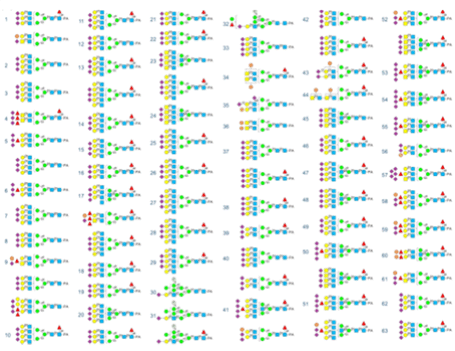
Fig. The combination of BlotGlyco™
and HPLC enables precise glycan analysis
References
- Ozawa Y, et al. Time-of-Day Differences in the Plasma N‑Glycome of Normal and Obese Mice and the Effects of Dapagliflozin Administered in the Morning or at Night., Journal of Proteome Research., 25, 5(2026): 2558–2568.
https://doi.org/10.1021/acs.jproteome.6c00081 - Feleke DG, et al. Upregulation of Sulfated N-Glycans in Serum as Predictive Biomarkers for Early-Stage Breast Cancer., International Journal of Molecular Sciences., 26, 11 (2025):4968.
https://doi.org/10.3390/ijms26114968 - FURUKAWA J, et al. Comprehensive approach to structural and functional glycomics based on chemoselective glycoblotting and sequential tag conversion., Analytical chemistry., 80, 4(2008): 1094-1101.
https://doi.org/10.1021/ac702124d - Shimaoka H, et al. One-pot solid-phase glycoblotting and probing by transoximization for high-throughput glycomics and glycoproteomics., Chemistry - A European Journal., 13, 6(2007) :1664-73.
https://doi.org/10.1002/chem.200601613 - Miura Y., et al. Rapid and Simple Solid-Phase Esterification of Sialic Acid Residues for Quantitative Glycomics by Mass Spectrometry., Chemistry - A European Journal., 13, 17(2007) :4797- 4804
https://doi.org/10.1002/chem.200601872
Product List
- Open All
- Close All
Glycan Purification and Labelling Kit: BlotGlyco™
For research use or further manufacturing use only. Not for use in diagnostic procedures.
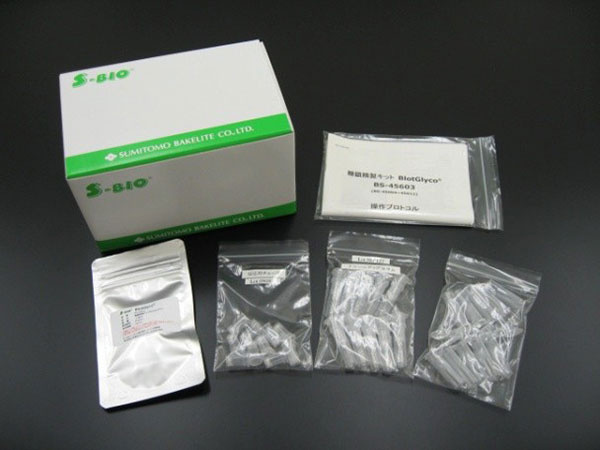
Product content may differ from the actual image due to minor specification changes etc.
If the revision of product standards and packaging standards has been made, there is a case where the actual product specifications and images are different.
Reception hours: Mon-Fri 9:00 - 15:00 (CET)For other hours than the above, please contact us via the inquiry form.