



Presep™ DNA/RNA Type A: Reversed-Phase SPE Columns for Oligonucleotide Purification
Presep™ DNA/RNA Type A is a silica-based reversed-phase solid-phase extraction (SPE) column for the cleanup, on-column DMT deprotection, and purification of synthetic oligonucleotides. Its high sample-loading capacity supports high-purity purification with high recovery. A range of column sizes is available for different synthesis scales, with application examples for conjugated oligonucleotides and automated high-throughput processing.

Features
- Achieves a high sample load
- Enables a sample load 3 to 5 times higher than commercially available pretreatment columns
- Excellent deprotection efficiency
- Enables purification with a high level of purity and high recovery rate
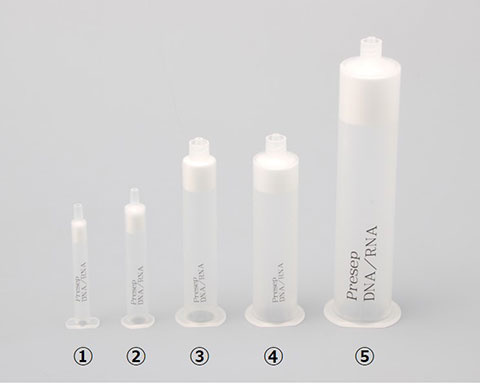
Product Appearance
Specification
| No. | Product Name | Packing Materials | Syringe Size | End-Fitting Type | Purification amount |
|---|---|---|---|---|---|
| ① | Presep™ DNA/RNA Type A (85 mg/1 mL) | Silica gel | 5.5 φ x 57 mm | Luer slip | 0.2 - 0.5 μmol |
| ② | Presep™ DNA/RNA Type A (255 mg/3 mL) | Silica gel | 9.0 φ x 63 mm | Luer slip | 1 - 1.5 μmol |
| ③ | Presep™ DNA/RNA Type A (1.0 g/15 mL) | Silica gel | 15 φ x 87 mm | Luer lock | 4 - 6 μmol |
| ④ | Presep™ DNA/RNA Type A (1.7 g/25 mL) | Silica gel | 21 φ x 85 mm | Luer lock | 6 - 10 μmol |
| ⑤ | Presep™ DNA/RNA Type A (5.1 g/70 mL) | Silica gel | 27 φ x 134 mm | Luer lock | 20 - 30 μmol |
Recommended accessories: A vacuum manifold manufactured by GL Sciences Inc. is recommended for solid-phase extraction. To connect a Luer-slip or Luer-lock outlet to a Luer-tip connection, use a polypropylene Luer Flow Control Valve (GL Sciences Inc., Model CS002-PP; Cat. No. 6045-11000).
Precautions for Use
Presep™ DNA/RNA should be used in the aspiration mode where the exit side of the column is depressurized and aspirated. An aspiration manifold is useful for handling multiple samples.
Solid-phase extraction conditions (recommended)
① Presep™ DNA/RNA Type A (85 mg/1 mL)
| Steps | Materials | Amount Used |
|---|---|---|
| Conditioning | Acetonitrile | 1 mL |
| 100 mg/mL NaCl aq. | 1 mL x 2 | |
| Sample Loading | Sample solution 0.5 mL + 100 mg/mL NaCl aq. 0.5 mL | 1 mL |
| Washing 1 | Acetonitrile/100 mg/mL NaCl aq.=5/95(v/v) | 1 mL x 2 |
| DMT Deprotection | 2% DCA*1 aq. (DCA/Water=2/98(v/v)) | 1 mL |
| Washing 2 | RNase Free Water | 1 mL x 2 |
| Elution | 0.5% NH4OH in Acetonitrile/Water=50/50(v/v)*2 | 1 mL |
② Presep™ DNA/RNA Type A (255 mg/3 mL)
| Steps | Materials | Amount Used |
|---|---|---|
| Conditioning | Acetonitrile | 3 mL |
| 100 mg/mL NaCl aq. | 3 mL x 2 | |
| Sample Loading | Sample solution 1 mL + 100 mg/mL NaCl aq. 1 mL | 2 mL |
| Washing 1 | Acetonitrile/100 mg/mL NaCl aq.=5/95(v/v) | 3 mL x 2 |
| DMT Deprotection | 2% DCA*1 aq. (DCA/Water=2/98(v/v)) | 3 mL |
| Washing 2 | RNase Free Water | 3 mL x 2 |
| Elution | 0.5% NH4OH in Acetonitrile/Water=50/50(v/v)*2 | 3 mL |
③ Presep™ DNA/RNA Type A (1.0 g/15 mL)
| Steps | Materials | Amount Used |
|---|---|---|
| Conditioning | Acetonitrile | 12 mL |
| 100 mg/mL NaCl aq. | 12 mL x 2 | |
| Sample Loading | Sample solution 5 mL + 100 mg/mL NaCl aq. 5 mL | 10 mL |
| Washing 1 | Acetonitrile/100 mg/mL NaCl aq.=5/95(v/v) | 12 mL x 2 |
| DMT Deprotection | 2% DCA*1 aq. (DCA/Water=2/98(v/v)) | 12 mL |
| Washing 2 | RNase Free Water | 12 mL x 2 |
| Elution | 0.5% NH4OH in Acetonitrile/Water=50/50(v/v)*2 | 12 mL |
④ Presep™ DNA/RNA Type A (1.7 g/25 mL)
| Steps | Materials | Amount Used |
|---|---|---|
| Conditioning | Acetonitrile | 20 mL |
| 100 mg/mL NaCl aq. | 20 mL x 2 | |
| Sample Loading | Sample solution 10 mL + 100 mg/mL NaCl aq. 10 mL | 20 mL |
| Washing 1 | Acetonitrile/100 mg/mL NaCl aq.=5/95(v/v) | 20 mL x 2 |
| DMT Deprotection | 2% DCA*1 aq. (DCA/Water=2/98(v/v)) | 20 mL |
| Washing 2 | RNase Free Water | 20 mL x 2 |
| Elution | 0.5% NH4OH in Acetonitrile/Water=50/50(v/v)*2 | 20 mL |
⑤ Presep™ DNA/RNA Type A (5.1 g/70 mL)
| Steps | Materials | Amount Used |
|---|---|---|
| Conditioning | Acetonitrile | 60 mL |
| 100 mg/mL NaCl aq. | 60 mL x 2 | |
| Sample Loading | Sample solution 20 mL + 100 mg/mL NaCl aq. 20 mL | 40 mL |
| Washing 1 | Acetonitrile/100 mg/mL NaCl aq.=5/95(v/v) | 60 mL x 2 |
| DMT Deprotection | 2% DCA*1 aq. (DCA/Water=2/98(v/v)) | 60 mL |
| Washing 2 | RNase Free Water | 60 mL x 2 |
| Elution | 0.5% NH4OH in Acetonitrile/Water=50/50(v/v)*2 | 60 mL |
*2 Add 50 µL of 28% ammonium hydroxide per 10 mL of 50% acetonitrile in water.
Comparison of separation capacity
1. Oligonucleotide Recovery
Cartridge Columns Evaluated
| FUJIFILM Wako (Presep™ DNA/RNA Type A) |
Competitor A | Competitor B | Competitor C | |
|---|---|---|---|---|
| Sorbent Material | Silica gel | Silica gel | Polymer | Polymer |
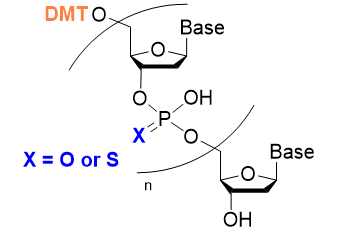
Oligonucleotides Evaluated
| Sample Name | Length | Linkage Type |
|---|---|---|
| Sample 1 | 14 mer | PO |
| Sample 2 | 21 mer | PO |
| Sample 3 | 21 mer | PS |
| Sample 4 | 50 mer | PO |
Comparison of Oligonucleotide Recovery
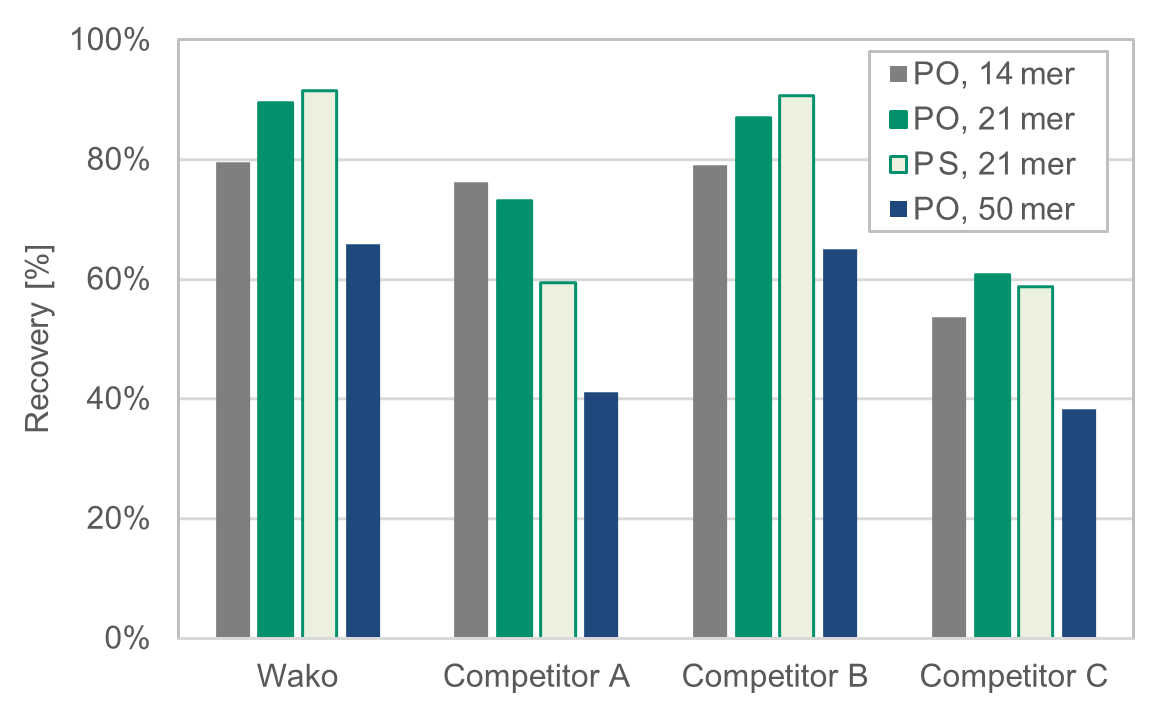
achieves high recovery.
Wako ≒ B > A > C
- Oligonucleotide samples were purified using the protocol recommended by each manufacturer.
- Oligonucleotide concentration was measured with a spectrophotometer.
- Recovery was calculated as "oligonucleotide concentration in the eluate/oligonucleotide concentration before loading".
2. Breakthrough Curve
Oligonucleotide Load vs Breakthrough
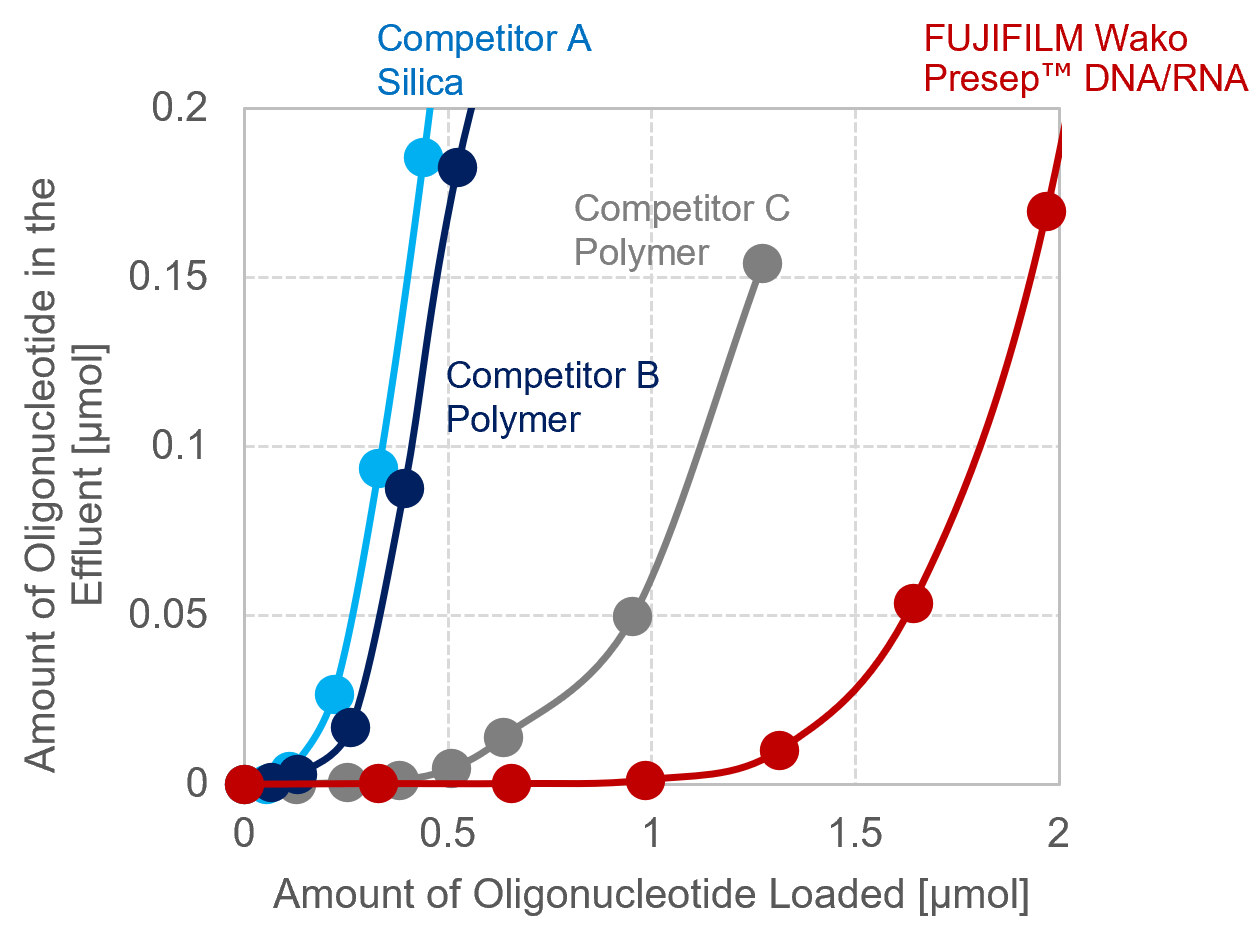
Presep™ DNA/RNA Type A provides high loading capacity for medium-sized molecules including oligonucleotides. Under the conditions evaluated, the column retained approximately 2 to 5 times more oligonucleotide before breakthrough than the other SPE columns tested. This high loading capacity may reduce the number of purification runs and the volume of solvent required.
3. DMT Group Deprotection Efficiency
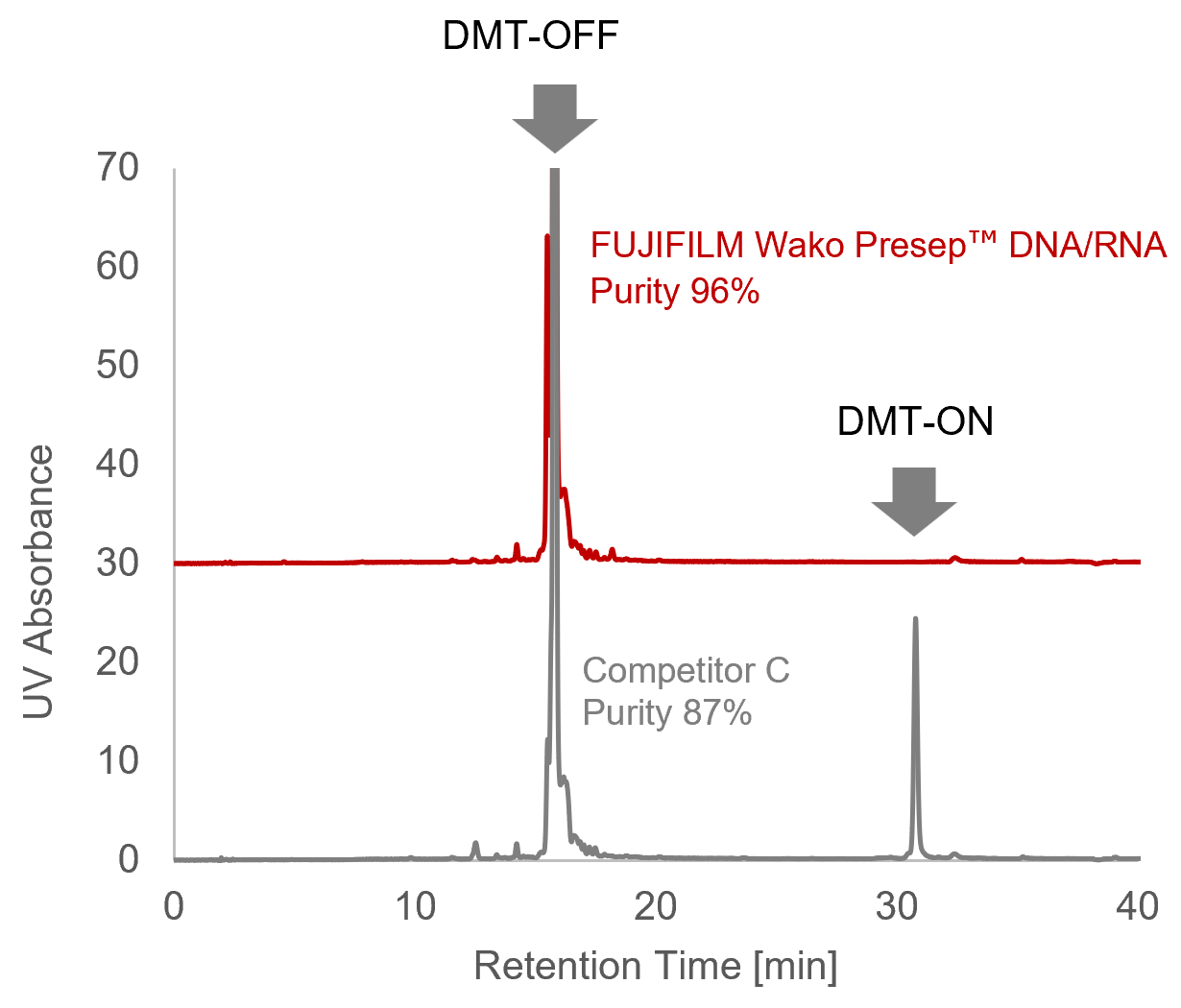
FUJIFILM Wako > C
Comparative testing showed that Presep™ DNA/RNA Type A achieved 96% purity, compared with 87% for Competitor C, under the conditions evaluated. No apparent residual DMT-on oligonucleotide peak was observed with Presep™ DNA/RNA Type A. The low-swelling silica-based sorbent facilitates solvent exchange during on-column DMT deprotection, supporting efficient removal of the DMT group.
Optimization of Washing Conditions
Correlation Between DMT-on Retention Time and Optimal Acetonitrile Concentration for Washing
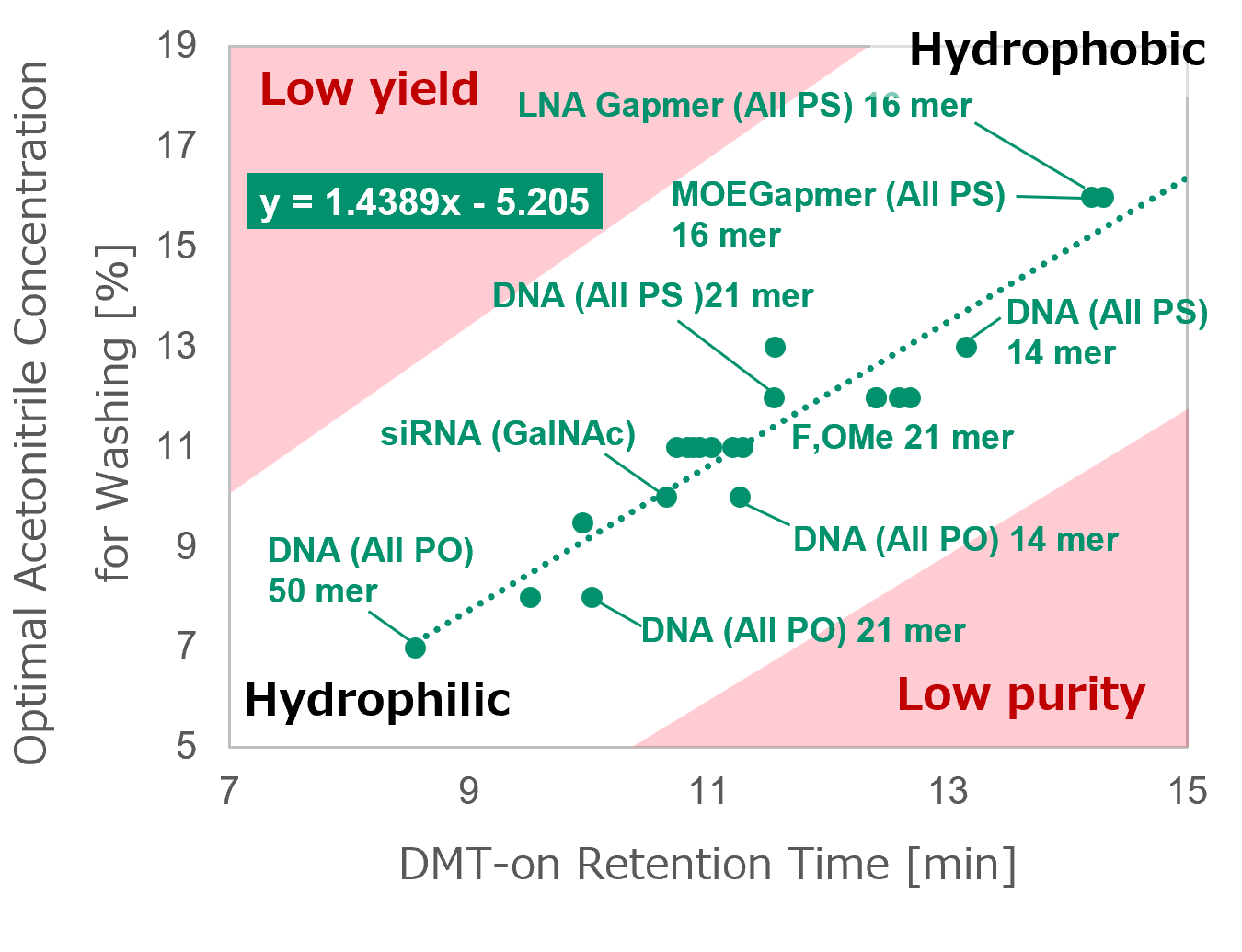
Conditions with Ease
The optimal acetonitrile concentration for the washing step can be estimated from the HPLC retention time of the DMT-on oligonucleotide.
HPLC Condition
- Column size
- Wakopak® Ultra C18-2 2.1 φ x 100 mm
- Mobile phase
- A) 100 mM TEAA aq.
B) Acetonitrile - Gradient
- 0-15 min B=5-40%, 15-20 min B=100%,20-25 min B=5%
- Flow rate
- 0.3 mL/min
- Temperature
- 40℃
- Injection vol.
- 0.5 μL
Applications
Example Protocol for Conjugated Oligonucleotides
Using the sequence design employed for GalNAc-siRNA therapeutics as a reference, we synthesized 3'-conjugated oligonucleotides with Tocopherol-TEG or Cholesteryl-TEG and evaluated the removal of the unconjugated species.
Oligonucleotide Sequences Used in the Evaluation
| Sample Name | Length | Sequence | 3’ Conjugate |
|---|---|---|---|
| Sample 5 | 21 mer | 5’)Cm S Am S Gm O Am O Am O Am O Gf O Um O Gf O Um O Gf O Um O Cf O Um O Cf O Am O Um O Cm O Um O Um O Am(3’ | Tocopherol-TEG |
| Sample 6 | 21 mer | 5’)Cm S Am S Gm O Am O Am O Am O Gf O Um O Gf O Um O Gf O Um O Cf O Um O Cf O Am O Um O Cm O Um O Um O Am(3’ | Cholesteryl-TEG |
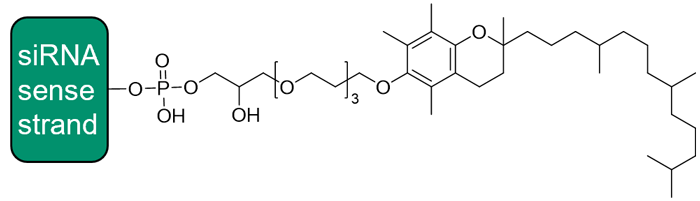
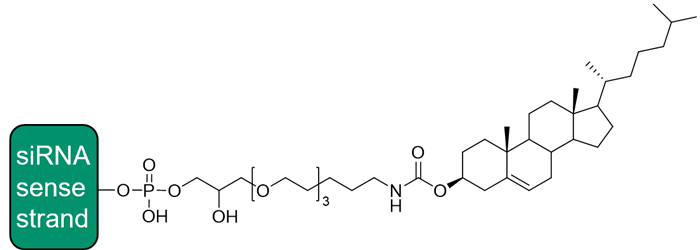
Separation of Conjugated and Unconjugated Oligonucleotides Under DMT-ON Conditions
Under DMT-on conditions, both conjugated and unconjugated oligonucleotides contain a hydrophobic DMT group at the 5′ terminus and are therefore strongly retained on the reversed-phase sorbent. As a result, conventional protocols may not fully utilize the difference in hydrophobicity arising from the presence or absence of the conjugate moiety. An optimized protocol with an additional washing step enables the removal of unconjugated oligonucleotides while retaining the conjugated products.


Improved Protocol for Removing Unconjugated Oligonucleotides
An additional washing step with 30% acetonitrile in 100 mM TEAA was incorporated into the protocol for conjugated oligonucleotides to remove unconjugated species.
| Steps | Materials | Amount Used |
|---|---|---|
| Conditioning | Acetonitrile | 1 mL |
| 100 mg/mL NaCl aq. | 1 mL x 2 | |
| Sample Load | Sample solution 0.1 mL+100 mg/mL NaCl aq. 0.1 mL | 0.2 mL |
| Washing 1 | Acetonitrile/100 mg/mL NaCl aq.=30/70 (v/v) | 1 mL x 2 |
| Additional Washing | Acetonitrile/100 mM TEAA aq.=30/70 (v/v) | 1 mL x 2 |
| Deprotection | 3% DCA aq. (DCA/Water=3/97 (v/v)) | 1 mL |
| Washing 2 | RNase Free Water | 1 mL x 2 |
| Elution | 0.5% NH4OH in Acetonitrile/Water=75/25 (v/v) | 1 mL x 2 |
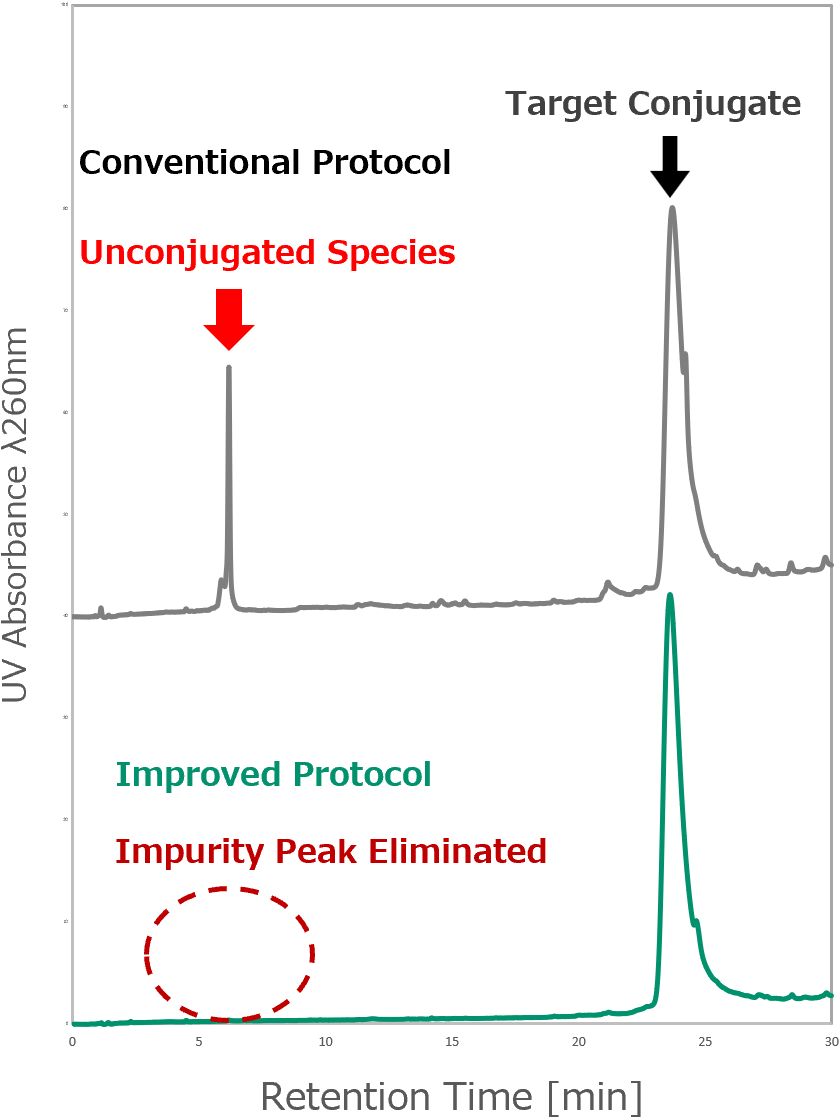
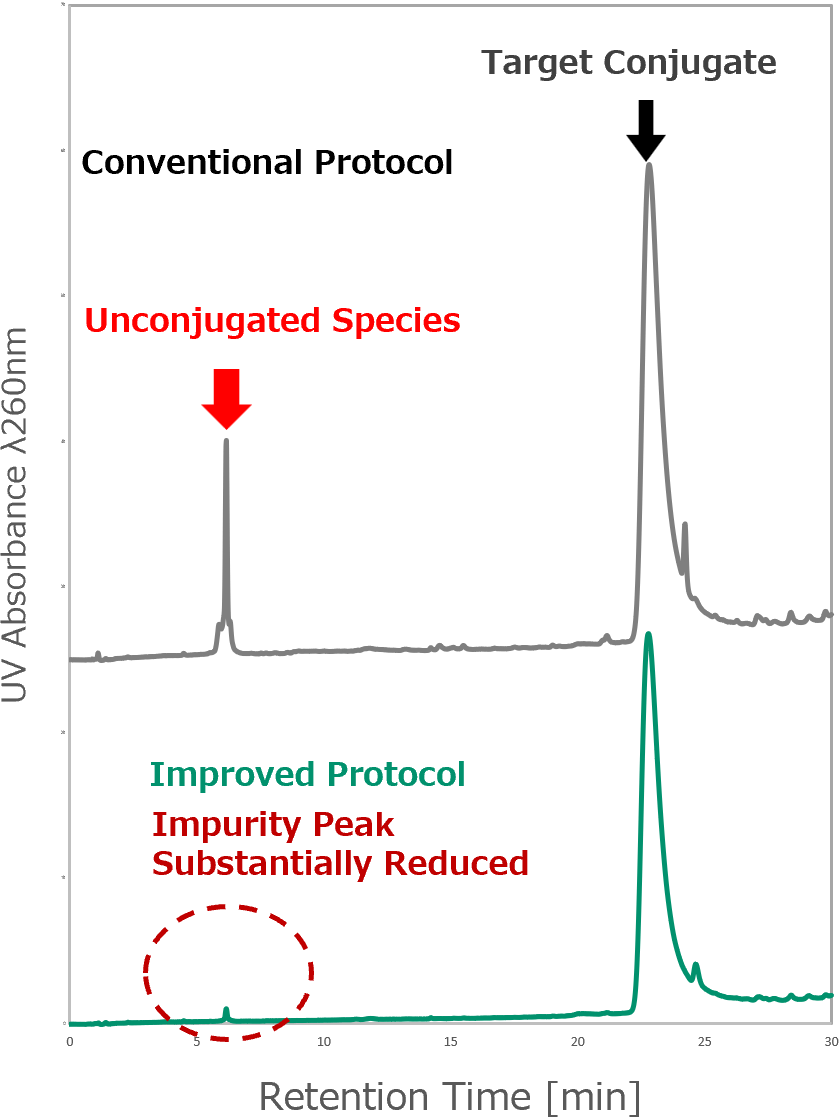
HPLC Condition
| Column size | : Wakopak® Ultra C18-2 2.1 φ x 100 mm |
| Mobile phase | : A) 100 mM TEAA aq. : B) Acetonitrile |
| Gradient | : 0-30 min B=5-75%, 30-35 min B=100%, 35-40 min B=5% |
| Flow rate | : 0.3 mL/min |
| Temperature | : 40℃ |
| Injection vol. | : 0.5 μL |
Removal of Unconjugated Oligonucleotides
Using the improved protocol with an additional washing step, removal of unconjugated species was confirmed for both Tocopherol-TEG- and Cholesteryl-TEG-conjugated oligonucleotides.
Compatibility with Automated Systems
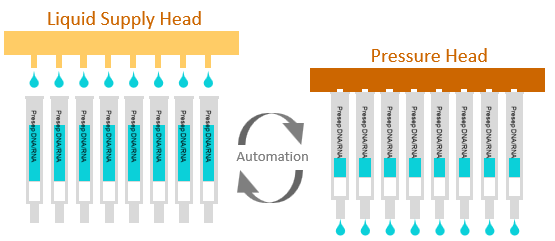
As an automated solution for high-throughput sample processing, Presep™ DNA/RNA Type A can be used with the Tecan Resolvex® A200 for automated solid-phase extraction. This combination streamlines the workflow and helps reduce operator-to-operator variability.
System Used:Tecan Resolvex® A200
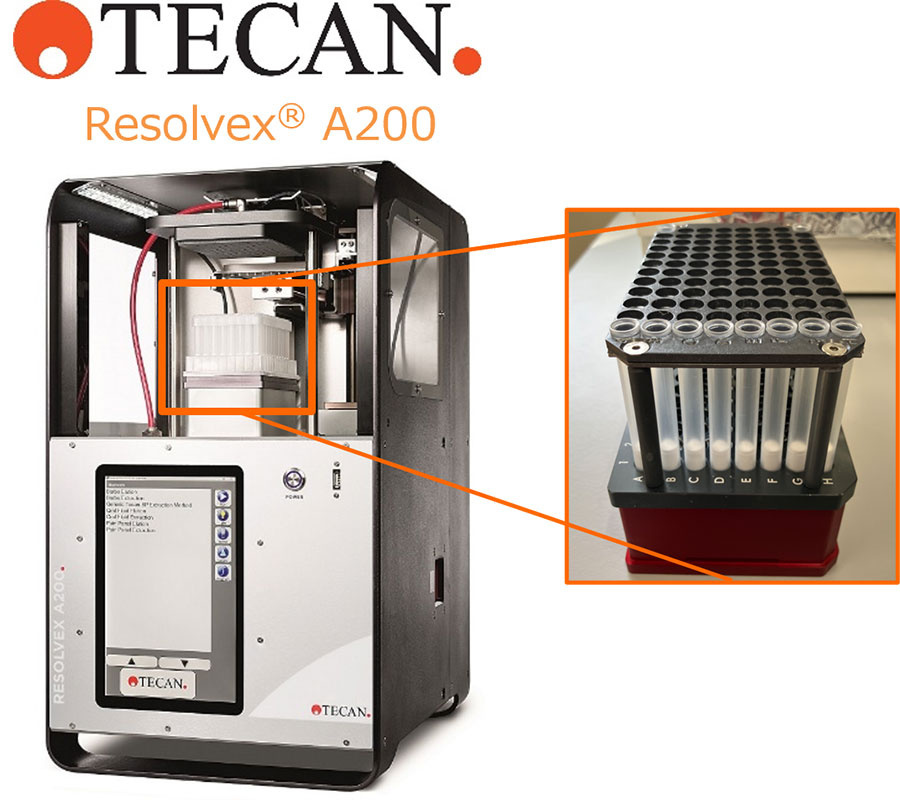
Automation System
| System | : Tecan Resolvex® A200 |
| Processing Mode | : Positive Pressure SPE |
| Compatible Columns | : Presep™ DNA/RNA Type A |
| Compatible Column Sizes | : 1 mL, 3 mL |
| Number of Solvents | : Up to 11 |
| Pressure Range | : 0 - 5.5 bar |
| Control | : Touch screen control |
Liquid-Delivery Mechanism for Automated SPE
Reagents are dispensed from the liquid-supply head, followed by positive-pressure delivery through the pressure head. This mechanism enables uniform flow through each column, supporting reproducible solid-phase extraction.
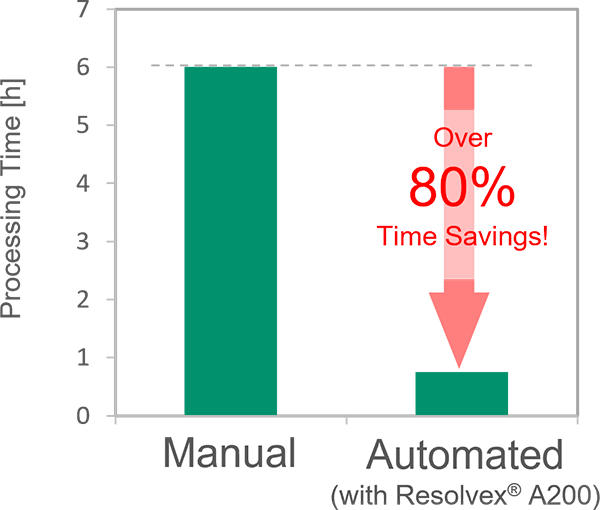
Comparison of Processing Times for 96 Samples: Manual vs Automated
Using the Tecan Resolvex® A200 reduced the processing time for solid-phase extraction of 96 samples by more than 80% compared with manual processing.
Purification Reproducibility under Automated Conditions
Combining Presep™ DNA/RNA Type A with the Tecan Resolvex® A200 automates reagent dispensing and solvent delivery, helping reduce operator-to-operator variability and provide consistent purification results.
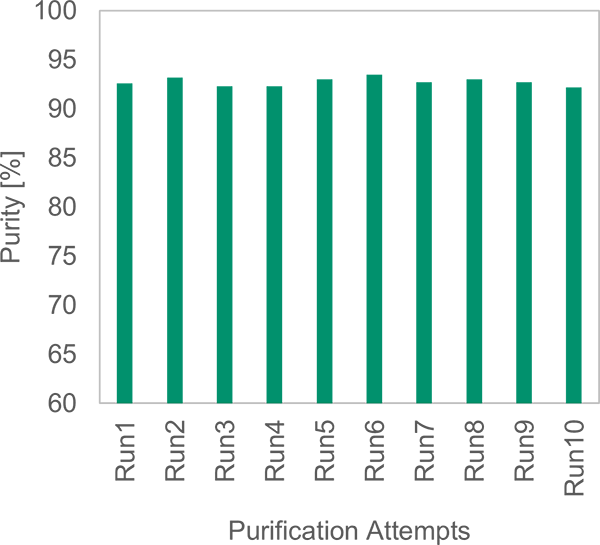
±3% across 10 Purification Runs
Automation-Compatible Column Lineup
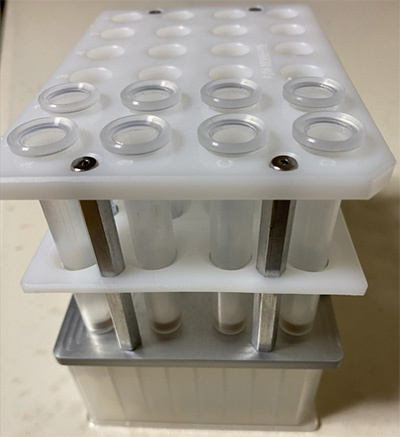
The 1 mL and 3 mL Presep™ DNA/RNA Type A columns are compatible with the Tecan Resolvex® A200, enabling automated purification at synthesis scales ranging from 0.2 to 1.5 μmol.
| 1 mL | 3 mL | |
|---|---|---|
| Image | 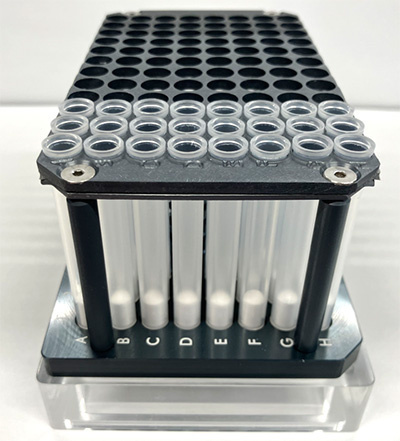 |
 |
| Syringe Volume | 1 mL x 96 | 3 mL x 24 |
| Particle Support Weight | 85 mg | 255 mg |
| Synthesis Scale Compatibility | 0.2-0.5 μmol | 1-1.5 μmol |
Product List
- Open All
- Close All
For research use or further manufacturing use only. Not for use in diagnostic procedures.
Product content may differ from the actual image due to minor specification changes etc.
If the revision of product standards and packaging standards has been made, there is a case where the actual product specifications and images are different.
The prices are list prices in Japan.Please contact your local distributor for your retail price in your region.