


It has been added to the cart.

It has been added to the comparison table.

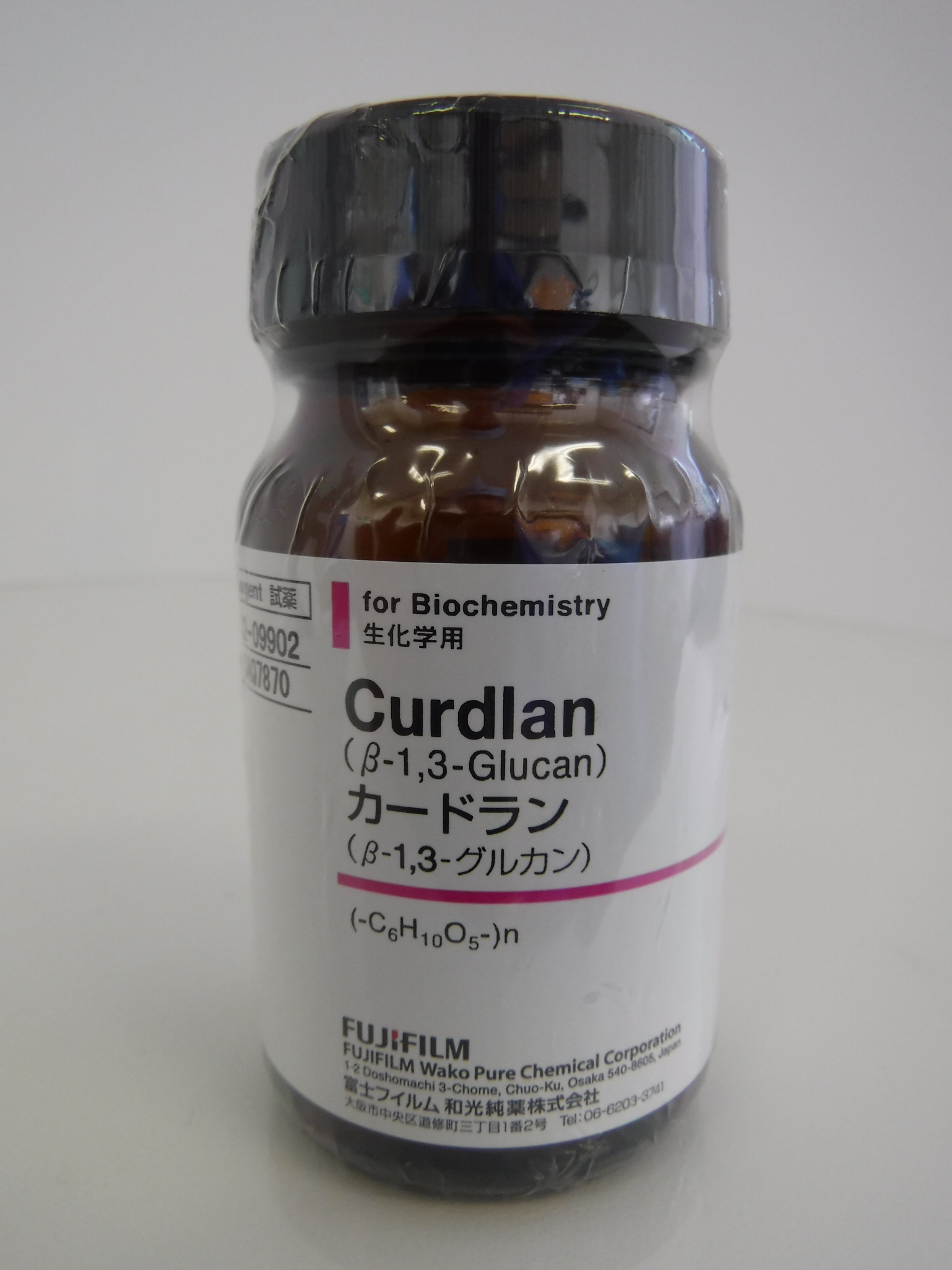
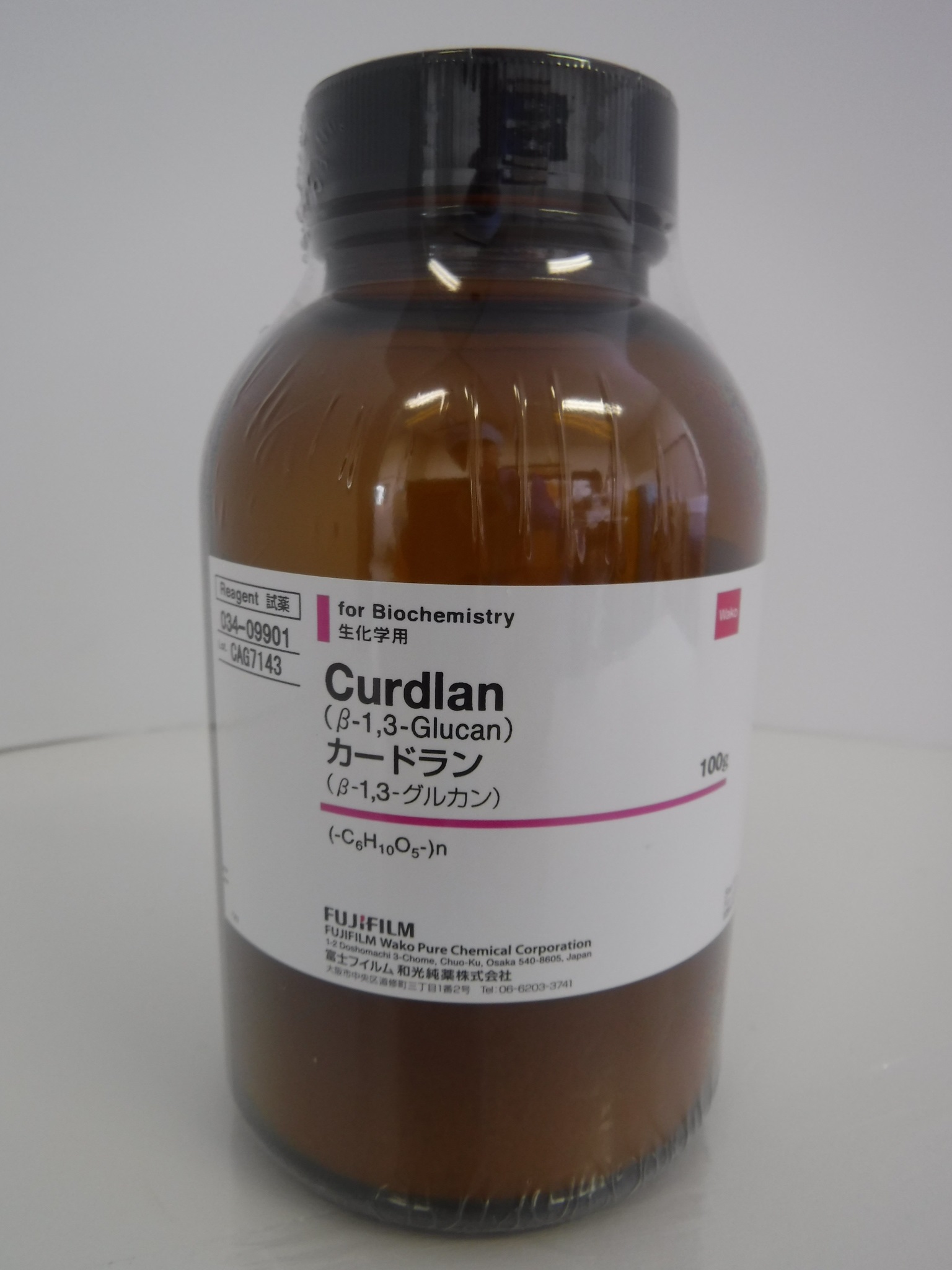
Curdlan

for Biochemistry
Manufacturer :
FUJIFILM Wako Pure Chemical Corporation
Storage Condition :
Keep at RT.
CAS RN® :
54724-00-4
Molecular Formula :
(-C6H10O5-)n
  • Structural Formula
  • Label
  • Packing
SDS
Comparison
Product Number
Package Size
Price
Availability
Certificate of Analysis
Purchase
Distributor
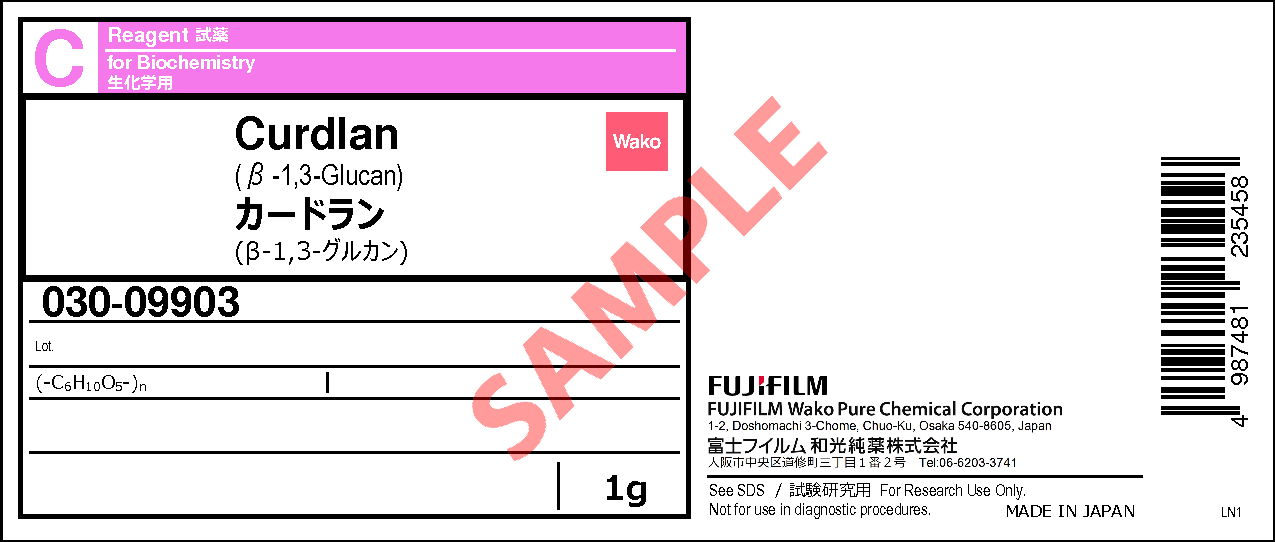
030-09903
Barcode No
4987481235458
1G
List Price
26.00 USD

In stock in Japan

Distributor
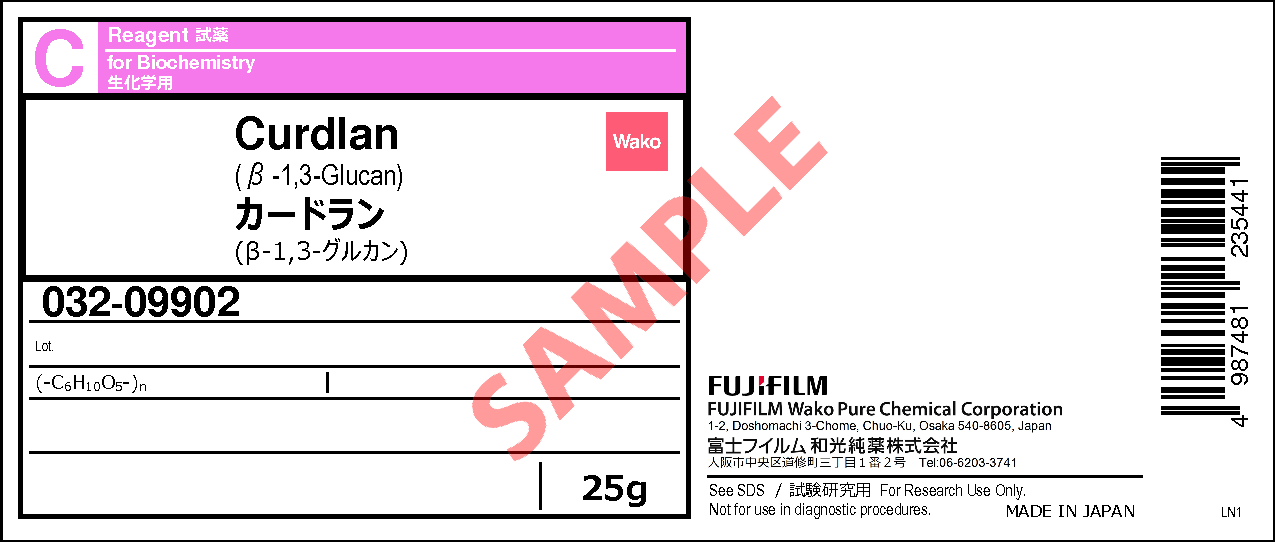
032-09902
Barcode No
4987481235441
25G
List Price
47.00 USD

In stock in Japan

Distributor
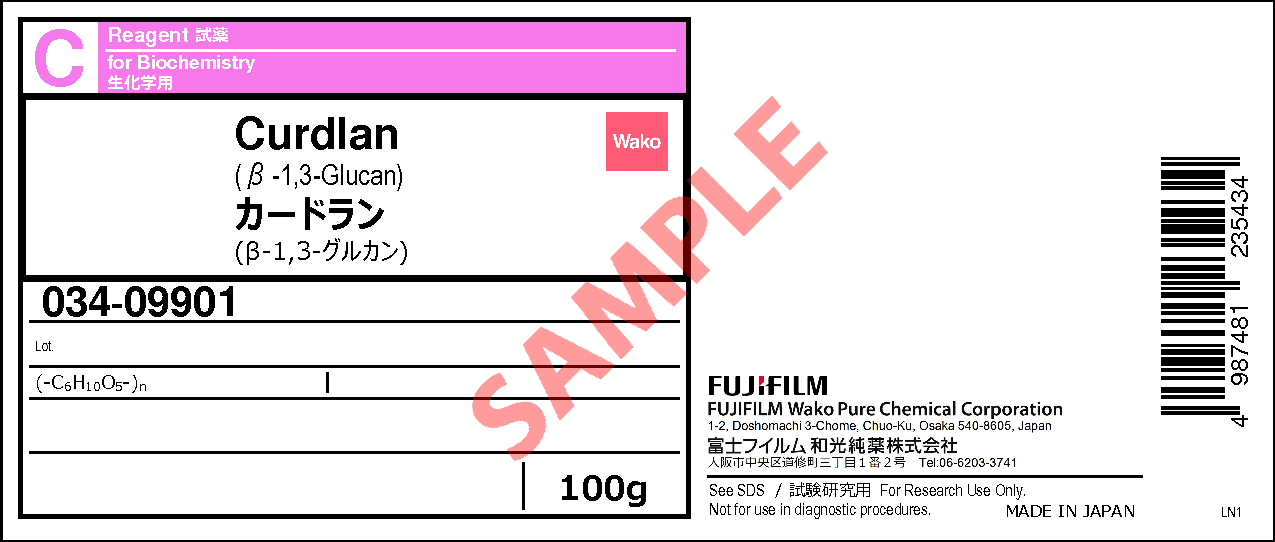
034-09901
Barcode No
4987481235434
100G
List Price
133.00 USD

In stock in Japan

Document

SDS
Product Specification Sheet
Package Insert
Spectral Data
Certificate of Analysis
Calibration Certificate
Analytical Charts

Overview / Applications

Outline This product is for research use only. Do not administer it to human.


Curdlan is produced as a water-insoluble polysaccharide by the soil bacterium, Alcaligenes faecalis var. myxogenes, and was discovered by Dr. T. Harada at the Institute of Scientific and Industrial Research, Osaka University. One of the characteristics of Curdlan is that when the suspension is heated, it becomes a thermally irreversible gel. Curdlan is used as gel filtration support, affinity chromatography support, immobilized enzyme support, starch jelly and low calorie food or a material hardening substance. Curdlan has gained attention as a research material for gelation mechanism or as a basic material for anti-tumor polysaccharide research.
Appearance: White ~ slightly brown, Powder
Structure: Straight chain without branch
Solubility: Insoluble in water and many organic solvents. Freely soluble in aqueous alkaline solution. Soluble in DMSO and formic acid.
Specific Rotation [A]20/D: +30.0 ~ +35.0
Gel stability: pH 2.0 ~ 9.5 (max. gel strength: pH 2 ~ 3)
USAGE:
Gel filtration and affinity chromatography; Immobilized enzyme support; Research for mechanism of gelation; Research for anti-tumor glucans CM-CURDLAN [Carboxymethyl-beta-1,3-D-glucan]
CM-Curdlan is water soluble beta-1,3-glucan which modified by carboxymethylation at 40 ~ 80% substitution from Curdlan.

REFERENCES:

  1. T. Harada: Polysaccharides In Food, Butterworths In England, 283 (1979).
  2. Harada, T., Masada, M., Fujimori, K. and I. Maeda, I.: Agric. Biol. Chem., 30, 196 (1966).
  3. Harada, T., Misaki, A. and Saito, H.: Arch. Biochem. Biophys., 124, 292 (1968).
  4. Hisamatsu, M., Ott, I., Amemura, A., Harada, T., Nakanishi, I. And K. Kimura.: J. Gen. Microbiol., 103, 375 (1977).
  5. Maeda, I., Saito, H., Masada, M., Misaki, A. and Harada, T.: Agric. Biol. Chem., 31, 1184 (1967).
  6. Konno, A., Azechi, Y. and Kimura, H.: Agric. Biol. Chem., 43, 101 (1979).
  7. Murooka, Y., Yim, M., Yamada, T. and Harada, T.: Biochim. Biophys. Acta., 485, 134 (1977).
  8. Kimura, H., Moritaka, S. and Misaki, M.: J. Food Science, 38, 668 (1973).
  9. Takeda, H., Yasuoka, N., Kasai, N., and Harada, T.: Polymer Journal, 10, 365 (1978).
  10. Marchessault, R. H. and Y. Deslandes: Carbohyd. Res., 75, 231 (1979).
  11. Fulton, W. S. and E. D. T. Atkins: ACS Symposium Series, 141, 385 (1980).
  12. Saito, H., Ohki, T. and Sasaki, T.: Biochemistry, 16, 908 (1977).
  13. Harada, T., Koreeda, A., Sato, S. and N. Kasai: J. Electron Microsc., 28, 147 (1979).
  14. Sasaki, T., Abiko, N., Sugino, Y. and Nitta, K.: Cancer Res., 38, 379 (1978).
  15. Sasaki, T., Abiko, N., Nitta, K., Takasuka, N. and Sugino, Y.: European J. Cancer, 15, 11 (1979).

Property

Appearance White - slightly brown, powder
Specific Rotation under investigation

Manufacturer Information

Alias

For research use or further manufacturing use only. Not for use in diagnostic procedures.

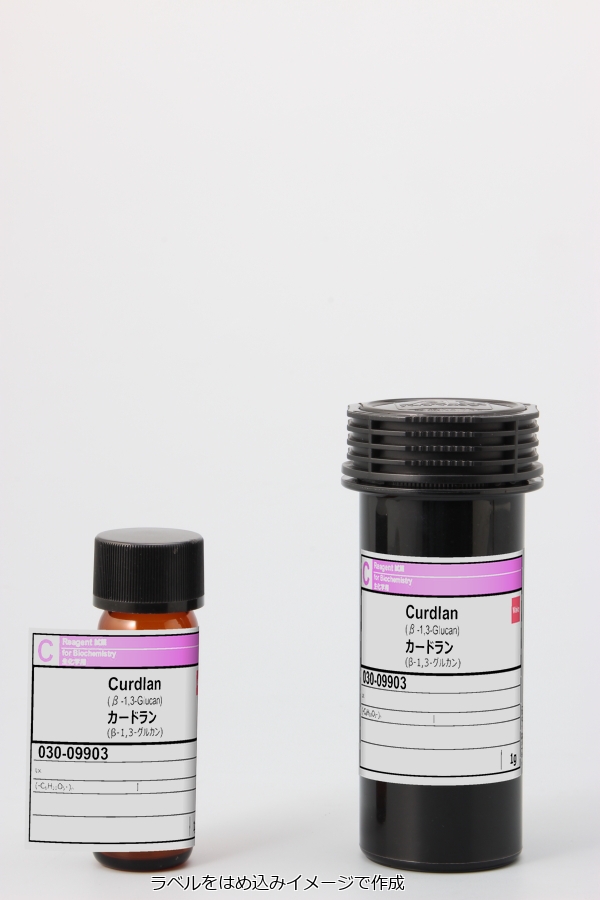
Product content may differ from the actual image due to minor specification changes etc.

If the revision of product standards and packaging standards has been made, there is a case where the actual product specifications and images are different.