



Chemical Phosphorylation Reagent

Chemical phosphorylation reagents(CPRs) are used to introduce a monophosphate group at the 5'-end of oligonucleotides. They play an essential role in nucleic acid functionalization and ligation reactions, and are generally referred to as CPRs.
Conventionally, 5'-end phosphorylation has been performed using enzymes such as kinases, with T4 polynucleotide kinase being a representative and widely used example. However, enzymatic phosphorylation presents challenges due to its high substrate specificity--efficiency can vary depending on the base at the 5′ end or the secondary structure of the oligonucleotide.1)。
In this context, chemical phosphorylation is attracting attention as an alternative to enzymatic phosphorylation. By employing highly reactive phosphorylating agents, chemical phosphorylation enables direct introduction of a phosphate group to the 5' end without the use of enzymes. This approach overcomes the issue of substrate dependence and enables more efficient synthesis of monophosphorylated oligonucleotides.
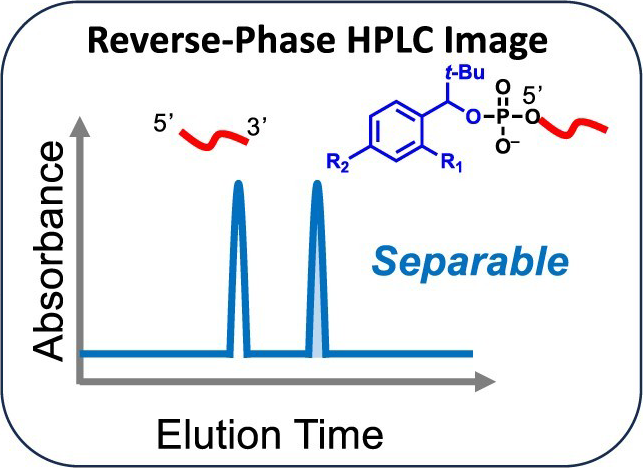
This product is a chemical phosphorylation reagent developed by Professor Abe's research group at Nagoya University.2) By introducing a hydrophobic nitrobenzyl (Nb) tag, the reagent enables the efficient separation and purification of the target oligonucleotide by reverse phase HPLC using the same principle as DMT-ON purification, resulting in markedly improved purity. In addition, the ultraviolet (UV)‑induced deprotection step suppresses degradation of unstable RNA, making this reagent suitable for synthesizing 5′-monophosphorylated RNA. This reagent is manufactured and sold under license from Crafton Biotechnology (WO2023/282245).

Features
- Chemical phosphorylation reagent with a nitrobenzyl tag
- Excellent coupling efficiency, up to 99%
- Enables high-purity isolation of oligos
- Innovative photolabile hydrophobic tag removed by UV irradiation
Applications
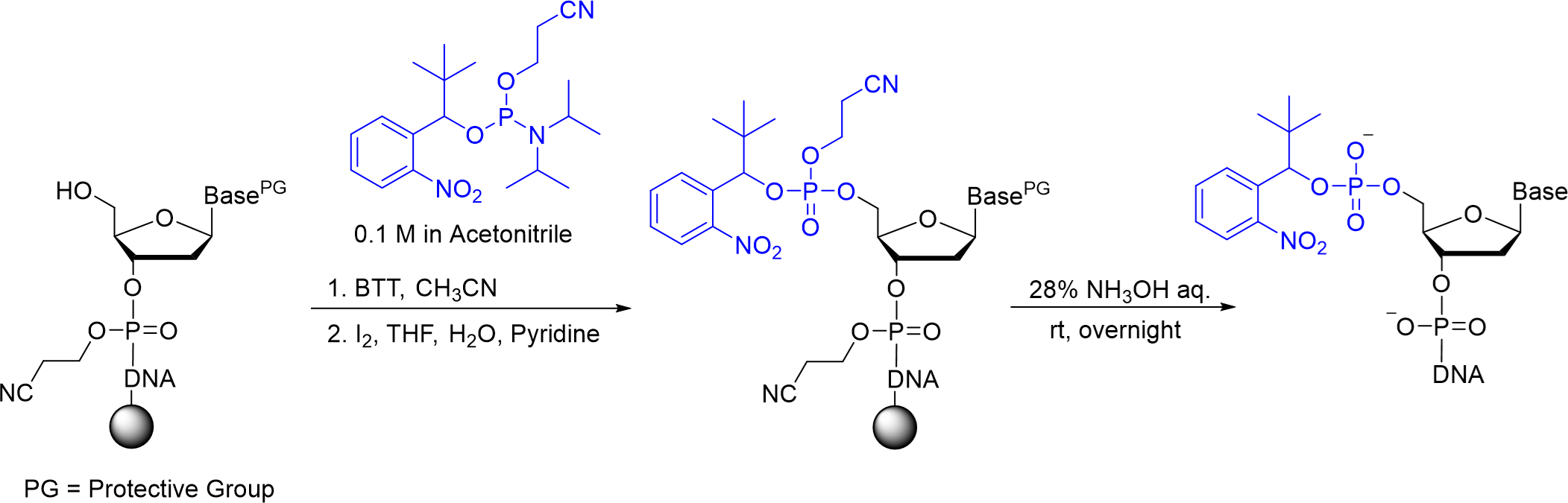
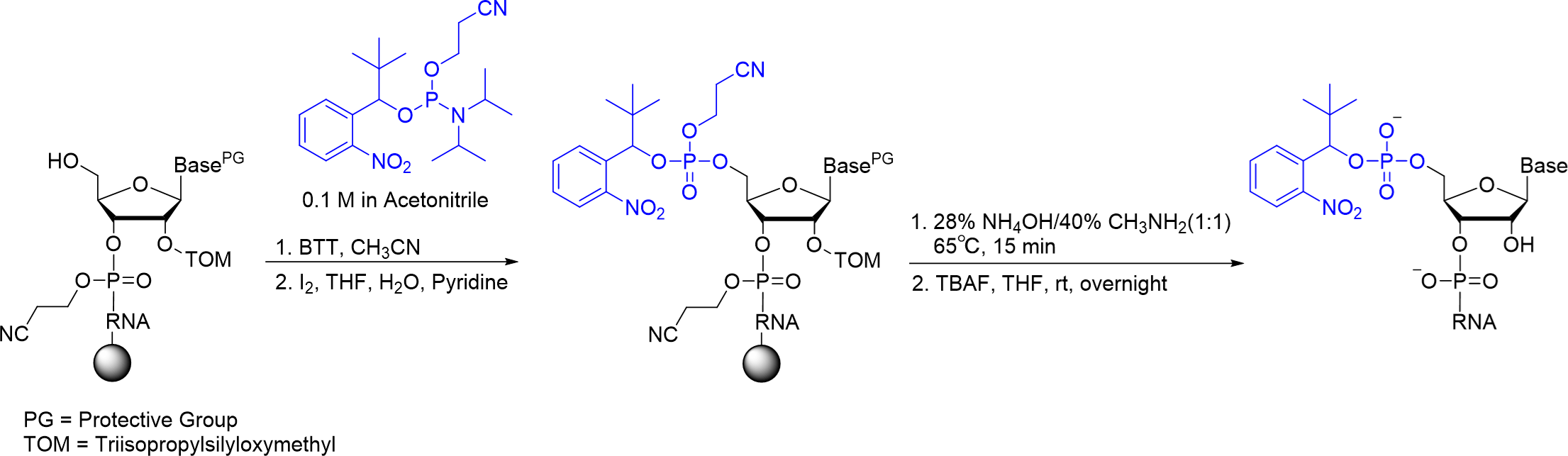
Synthesis of 5’-monophosphorylated oligonucleotides
Deprotection mechanism of nitrobenzyl group

UV irradiation at a wavelength of 365 nm (intensity: 4 mW/cm²) for 10 minutes.
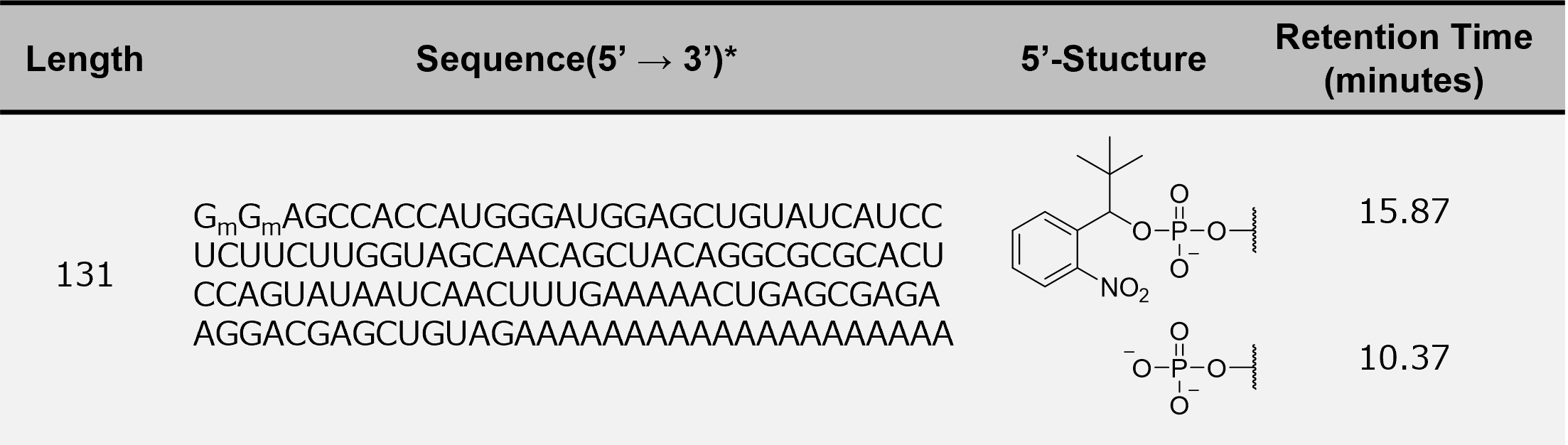
HPLC profile and dPAGE image of the 131-nucleotide 5'-monophosphorylated RNA
Table. List of Chemically synthesized RNA
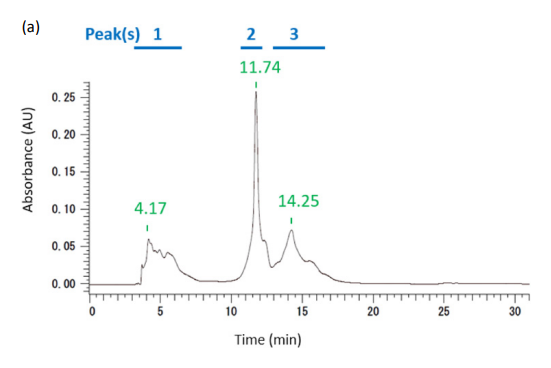
(a) HPLC profile of the crude RNA
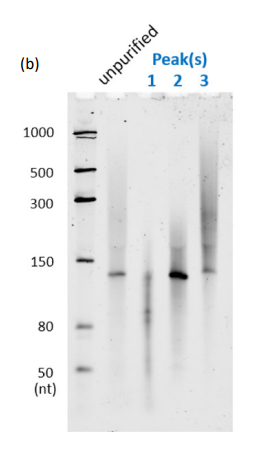
(b) dPAGE image of peak 1–3 of crude HPLC profile
(5% dPAGE containing 7M urea)
HPLC condition
- Column size
- C4 (250 x 4.6 10 mmI.D., S-5 µm, 30 nm)
- Mobile phase
- A) 50 mM TEAA buffer (pH 7.0) + 5% CH3CN
B) CH3CN - Gradient
- over 20min B=5-15%
- Flow rate
- 1 mL/min
- Temperature
- 50℃
- Detection
- 260 nm
- Loop size
- 2.0 mL
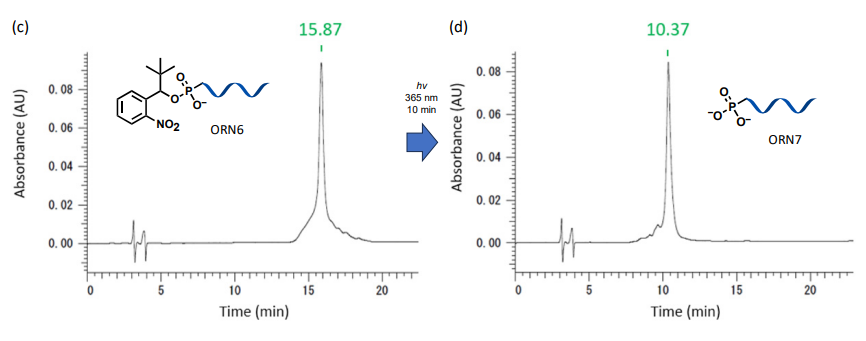
(c) HPLC profile of RNA after RP-HPLC purification
(d) HPLC profile of the produced 5’-monophosphate RNA
by UV-irradiation of 5′-Nb-protected RNA
HPLC condition
- Column size
- C18 (250 x 4.6 mmI.D., S-5 µm, 12 nm)
- Mobile phase
- A) 50 mM TEAA buffer (pH 7.0) + 5% CH3CN
B) CH3CN - Gradient
- over 20min B=5-15%
- Flow rate
- 1 mL/min
- Temperature
- 50℃
- Detection
- 260 nm
- Loop size
- 2.0 mL
Figure. HPLC profiles and dPAGE image for RNA synthesis and UV-induced deprotection.
High‑Efficiency, High‑Purity Separation and Purification of Long-Chain
RNA more than 100 Nucleotides!
References
- Andrei, G., et al.: Tetrahedron, 51, 9375 (1995) .
- Ototake, M., et al.: Nucleic Acids Research, 52, 12141 (2024) .
Product List
- Open All
- Close All
For research use or further manufacturing use only. Not for use in diagnostic procedures.
Product content may differ from the actual image due to minor specification changes etc.
If the revision of product standards and packaging standards has been made, there is a case where the actual product specifications and images are different.